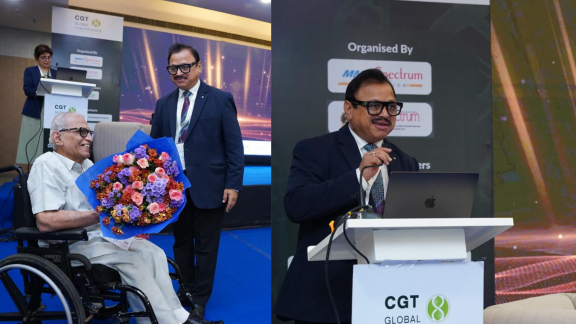
“The talent pool becomes extremely small, if we look for someone who has every possible skill and experience”
September 22, 2026 | Tuesday | Views
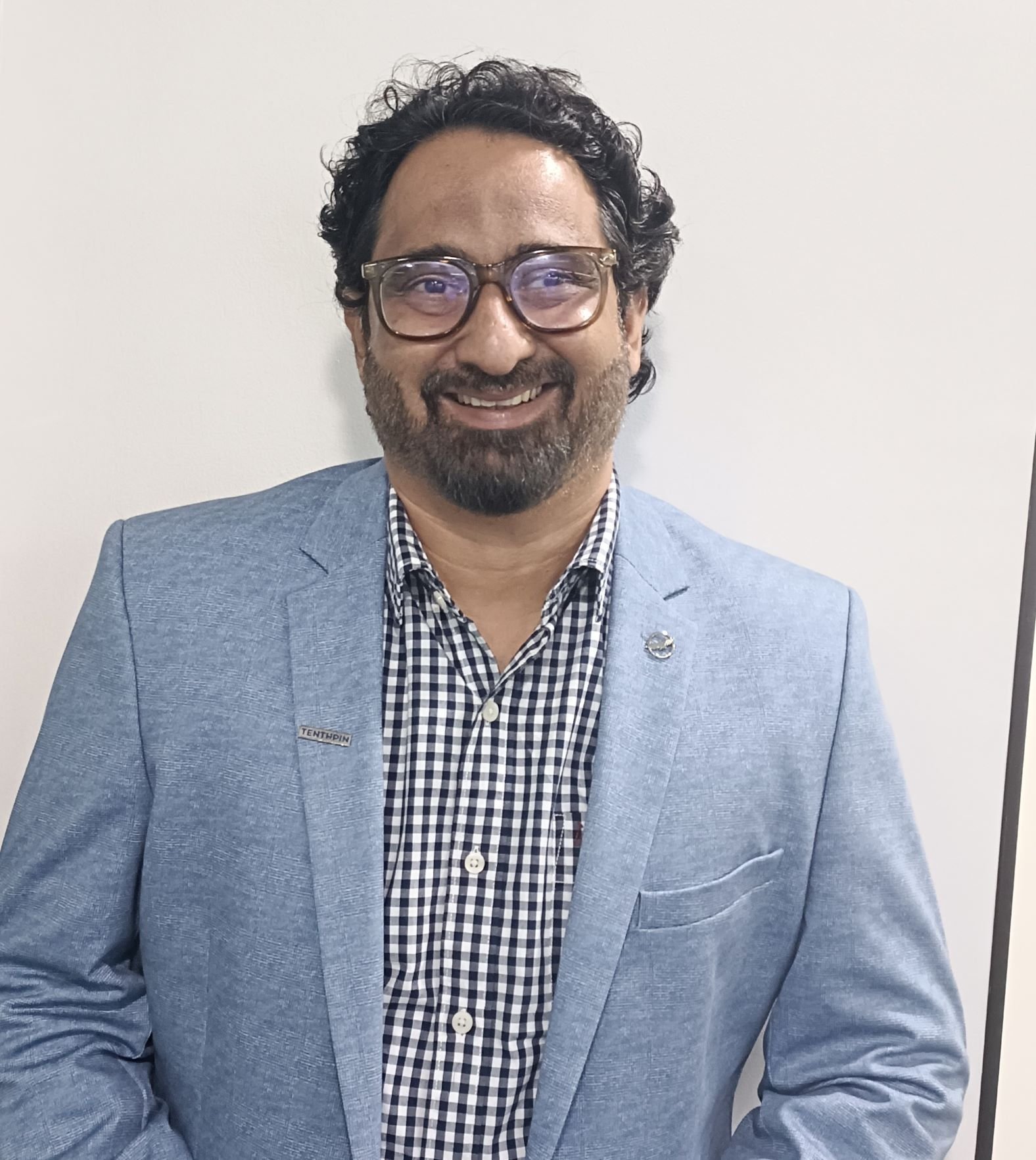
Switzerland-based Tenthpin Management Consultants, a global leader in management and technology consulting for life sciences companies, has opened its Innovation Hub in Bengaluru, establishing a Global Centre of Excellence dedicated to advanced therapies. The hub will leverage AI- and cloud-driven solutions to help organisations accelerate and transform complex gene, cell and tissue treatments into life-saving medicines. In this interaction with BioSpectrum India, Sachin Bhure, Partner and Managing Director, Tenthpin India, discusses the company’s India strategy, the role of Bengaluru in its global operations, and how the new hub will drive innovation across the life sciences industry.
Why has Bengaluru emerged as the headquarters for Tenthpin India, while you have also established operations in Pune and Hyderabad?
Bengaluru was where we started, but there are several strategic reasons for continuing to make it our headquarters.
First is talent. Bengaluru offers a deep and diverse pool of professionals with industry experience, technology expertise and exposure to the latest developments. Second is proximity to SAP, whose presence in Bengaluru enables close collaboration. Third, a significant amount of the talent that helped build our initial products and solutions is already based here, allowing us to further augment that team.
Hyderabad has become important for our AI capabilities. We have established our AI lab there and are also seeing significant traction from GCCs in the city. Being closer to customers and their teams is an advantage.
Pune gives us access to another substantial talent pool and has also developed into an important location for us.
Could tier-II cities become part of Tenthpin's talent strategy?
Absolutely. I personally come from a tier-II city, so I understand the potential of these locations.
Our flexible working model allows us to access talent beyond the traditional large technology hubs. For example, we have people working from locations such as Hubballi and other tier-II cities in Karnataka. Similarly, in Pune, we have people based outside the city who travel when their roles require physical presence.
The choice should not always be between relocating to a major city and compromising on a career opportunity. If our policies enable us to access high-quality talent from tier-II cities, there is no reason not to pursue that opportunity.
What proportion of your workforce currently works remotely?
It is not a fixed percentage because it depends on the role and project requirements. Approximately 50 per cent of our people have the choice to work remotely, subject to the nature of their role.
That flexibility also influences our office strategy. We could have taken a much larger office, but if a significant proportion of employees are working remotely, there is little value in maintaining a large office that remains underutilised.
This model is particularly relevant for working professionals, including women with young children. Flexible work arrangements can enable experienced professionals to continue contributing without having to step away from their careers.
Tenthpin has historically been strongly associated with SAP. Which technology partnerships are you exploring as you diversify?
SAP remains our core strength and there is still substantial opportunity there. But if we want to grow beyond our traditional business, we have to expand into adjacent platforms and technologies.
We are looking at platforms such as Salesforce, as well as products in manufacturing execution systems (MES) and laboratory information management systems (LIMS). Discussions around these partnerships are already underway.
Our partnership strategy has two dimensions. One is the technology and platform side, where we work with vendors. The second is the service-provider ecosystem, where established companies bring specialised expertise and experience.
We want to build an ecosystem where partners take ownership of outcomes rather than simply providing people on an hourly basis.
Are acquisitions also part of Tenthpin India's growth strategy?
Acquisition is certainly an option, particularly where we have no existing presence or capability.
However, acquisition for the sake of acquisition does not make sense. It has to add strategic value. If we identify an area where building capability from scratch would take significant time, acquiring an established capability and then building on it could be more effective.
That thought process is ongoing. We are evaluating where partnerships, organic development or acquisitions make the most sense depending on the technology platforms and capabilities we want to build.
You have 22 partners in India. What role does this ecosystem play in your business model?
We currently have 22 partners in India across different locations.
We deliberately do not view them as conventional subcontractors. We do not want a model where companies simply provide bodies to us on an hourly basis. We want established organisations that can take ownership and contribute specific expertise and capabilities.
As Tenthpin grows, this ecosystem becomes increasingly important because it enables us to combine our life sciences and consulting expertise with specialised capabilities available in the market.
Which areas of life sciences do you see generating the greatest opportunities over the next few years?
We intend to remain focused on life sciences because the sector itself offers enormous opportunity.
Advanced therapies are one important area. Personalised medicine, cell and gene therapies and other advanced treatment approaches are becoming increasingly relevant. There are still questions around affordability, scalability and clinical outcomes, particularly for highly personalised approaches, but the underlying innovation is significant.
Oncology is another area where we see considerable opportunity. We are working with companies developing potentially breakthrough solutions that are currently progressing through regulatory pathways. If these solutions can be scaled, technology can play an important role in helping make them more accessible.
CDMOs are another interesting growth area. We are seeing entirely different approaches to manufacturing. For example, we work with a customer developing portable manufacturing pods that can potentially be located close to hospitals for cell processing.
This challenges the traditional assumption that life sciences manufacturing always requires a large centralised factory. As processes evolve, the manufacturing model itself will have to evolve.
The third area is the continuing transformation of the pharmaceutical portfolio as patents expire and traditional blockbuster drugs face competition. This will create further demand for new technologies, processes and operating models.
How are regulatory and policy changes in India affecting your business?
The impact on our business is currently indirect because a large part of our work is with global clients. However, regulatory changes will certainly affect pharmaceutical companies operating in India.
Many of these policy developments are necessary because the operating environment is becoming more complex. Supply-chain disruption, geopolitical developments and regulatory changes are forcing companies to become much more adaptable.
For us, this creates an opportunity. Historically, if a regulatory or supply-chain change occurred, enterprise systems could be difficult to modify quickly. Companies now need systems that are nimble and adaptable, allowing them to respond rapidly to changes in their environment.
From our perspective, the key requirement is not simply implementing technology but designing systems that can respond to disruption.
As you expand, what kind of talent will you be hiring?
We are not looking only for technology specialists or only for domain experts. We need the right combination of technology and life sciences knowledge.
More importantly, we look for people who can advise clients. They need to understand the situation, identify the problem and guide the client towards the right solution. We do not want order-takers.
Our people should be capable of steering the engagement and challenging the client when required. That is why our recruitment process is relatively stringent.
On the technology side, SAP, artificial intelligence (AI) and data remain important. As we expand into other platforms, those capabilities will also become relevant. But life sciences process knowledge, regulatory understanding and GxP compliance will remain critical components of our talent strategy.
Is India able to provide the specialised talent required by life sciences technology companies?
Finding the ideal profile is always challenging. If we look for someone who has every possible skill and experience, the talent pool becomes extremely small.
Our approach is therefore to assess what can be trained and what the candidate must already understand. We look for people with a strong foundation and then develop the missing capabilities.
We have an internal university that helps bridge those gaps. We do not expect to build every capability from scratch, except in the case of interns or fresh graduates, but we are prepared to invest significantly in developing talent.
Are you seeing professionals return to India from developed markets, particularly amid uncertainty around overseas jobs and visas?
Yes, we are seeing an inflow of strong profiles.
There are professionals with international education and experience who are returning or considering India because of uncertainty around visas and employment opportunities in markets such as the US. We are also seeing profiles of people who have completed master's programmes overseas but have not been able to secure visas or jobs within the expected timeframe.
However, international experience alone is not sufficient. We have to assess whether an individual can add value in the role. Someone may have strong managerial experience but limited relevant life sciences or technology experience, which may not fit a particular requirement.
Narayan Kulkarni
narayan.kulkarni@mmactiv.com