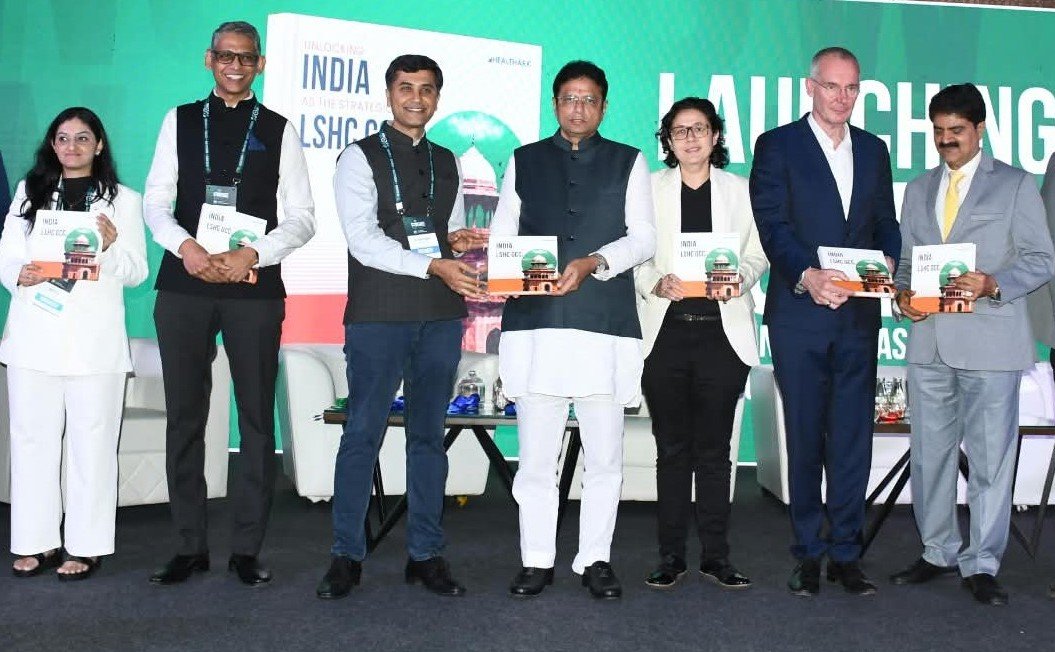
CGT Global Convergence 2026: India charts roadmap from scientific innovation to patient access
August 21, 2026 | Friday | News
The discussions across the five sessions highlighted a common message: India has demonstrated its ability to develop sophisticated CGT innovations, but scientific capability alone will not establish a globally competitive ecosystem
India’s cell and gene therapy (CGT) ecosystem is moving from scientific innovation towards clinical translation and commercialisation, but the country will need stronger regulatory pathways, specialised clinical infrastructure, manufacturing capabilities, financing models and patient-access mechanisms to realise its potential, experts said at the CGT Global Convergence 2026.
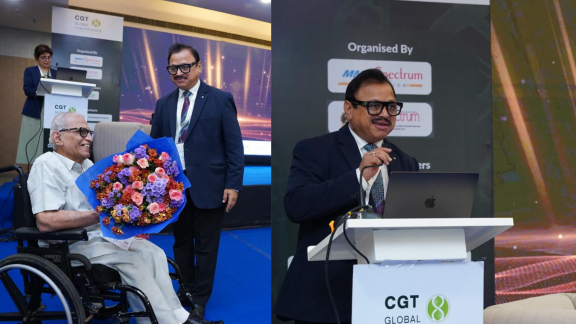
Organised by MMA Spectrum Foundation and BioSpectrum under the India CGT Mission 2030, with scientific coordination by Dr. Dhananjay Bakhle and MedRenova as the Knowledge Partner, the one-day international conference at CIDCO Convention Centre, Vashi, Navi Mumbai, brought together more than 100 leaders from biopharma, clinical medicine, research, regulation and investment to discuss how India can translate advances in cell and gene therapy into sustainable patient impact.
The convergence opened with remarks by Ravindra Boratkar, Managing Trustee, MMA Spectrum Foundation; Publisher, BioSpectrum; and Managing Director, MM Activ Sci-Tech Communications. He said the CGT sector is at an important inflection point, with therapies increasingly moving from scientific promise to clinical reality.
Boratkar highlighted India’s opportunity to leverage its scientific talent, pharmaceutical and biotechnology capabilities and ability to innovate at comparatively lower cost. However, he stressed that the ultimate measure of success would be whether transformative therapies can reach the patients who need them.
The inaugural session was followed by a context-setting address by Dr Dhananjay Bakhle, CEO, MedRenova, and an inaugural address by Padma Bhushan Dr S. H. Advani, Director of Medical Oncology, Jaslok Hospital and Nanavati Max Super Speciality Hospital and former Professor and Chief, Department of Medical Oncology, Tata Memorial Hospital.
From BMT to CAR-T: Dr Advani traces India’s cellular oncology journey
Speaking on “From BMT to CAR-T: India’s evolution in cellular oncology”, Dr Advani traced the transformation of cancer treatment from cytotoxic chemotherapy, surgery and radiotherapy to targeted therapies and cellular immunotherapy.
He noted that conventional cytotoxic drugs primarily focused on damaging DNA, affecting both tumour and healthy cells and resulting in significant adverse effects. The understanding of the human genome around the turn of the century, he said, changed the direction of oncology by providing deeper insights into how genes regulate cellular activity and how mutations contribute to cancer.
“Conventional therapy has been replaced now by precision therapy,” Dr Advani said.
He emphasised the central role of T-cells in modern immunotherapy, explaining that cancer cells originate from normal cells but acquire mutations that can result in abnormal proteins on their surface. These abnormalities can be recognised by the immune system, leading to activation of T-cells that can target and eliminate cancer cells.
Dr Advani also highlighted the progress made in cellular engineering. Technologies that were considered impossible decades ago now enable scientists to modify genes within cells, laying the foundation for advanced cellular therapies such as CAR-T.
India’s indigenous CAR-T platform targets global expansion
The inaugural session also featured Dr Rahul Purwar, Professor, Department of Biosciences and Bioengineering, IIT Bombay; Founder and Chairman, ImmunoACT; and Prix Galien Awardee for NexCAR19.
Speaking on “The journey of India’s first indigenous CAR-T therapy: lessons, challenges and the road ahead”, Dr Purwar highlighted the clinical experience of NexCAR19 and its potential to become a globally competitive and accessible CAR-T platform.
He said NexCAR19 has demonstrated encouraging outcomes in leukaemia and lymphoma. In leukaemia, the therapy recorded an efficacy rate of approximately 88 per cent after one month and 75 per cent after 90 days, with long-term response levels of around 50–55 per cent and overall survival of approximately 64 per cent. In lymphoma, the overall response rate was close to 60 per cent.
However, Dr Purwar stressed that patient selection and the timing of CAR-T therapy are critical. Patients receiving CAR-T only after exhausting multiple treatment options may have compromised T-cell quality because of previous chemotherapy. Earlier intervention, he suggested, could potentially improve response rates.
A key differentiator of NexCAR19 is its humanised CAR design, developed at IIT Bombay. According to Dr Purwar, the design can reduce toxicity and adverse immune reactions compared with approaches incorporating murine components.
The lower toxicity profile may also reduce intensive-care requirements and treatment-related costs, contributing to the therapy’s affordability.
NexCAR19 is now being administered at hospitals across India, while international patients are also travelling to the country for treatment. ImmunoACT has licensed the product to Cipla for markets including South Africa, Algeria and Morocco, while a clinical trial has received approval in Mexico.
Dr Purwar said NexCAR19 represents the foundation of a broader cell and gene therapy platform. The team is advancing a BCMA-targeted CAR-T therapy for multiple myeloma and exploring additional approaches, including off-the-shelf CAR-T and in-vivo cell engineering.
“We are not only creating one product; we have created a platform on which many more products can be developed,” he said.
India can become an access engine for advanced therapies
Amit Mookim, Board Director and Chief Executive Officer, Immuneel Therapeutics, argued that India should aim to become a global “access engine” for CGTs.
Speaking on “Creating a world-class cell and gene therapy ecosystem in India: from innovation to impact”, Mookim said the convergence of biology, engineering, artificial intelligence, genomics and data is changing the way therapies are discovered, designed and manufactured.
However, he cautioned that the promise of advanced therapies would remain limited unless healthcare systems could afford and deliver them.
CGT, he argued, must therefore be viewed not simply as a biotechnology challenge but as an integrated healthcare, manufacturing, data and financing challenge.
India already has several building blocks, including scientific talent, a large patient population, pharmaceutical manufacturing expertise and translational research capabilities. The next step, he said, is to connect these capabilities through mission-mode execution.
Mookim identified patient capital and an effective exit architecture as important gaps in India’s CGT ecosystem. Long-term investment is required to move innovations from laboratory research through clinical development and commercialisation.
He also called for stronger insurance and reimbursement mechanisms, modality-specific regulations, patient registries, accredited hospital networks and programmes to attract Indian scientific talent working overseas.
India needs an integrated CGT ecosystem
The next session, “Enabling Cell and Gene Therapies in India: Building the Foundations for Growth”, examined the scientific, manufacturing, regulatory and commercial infrastructure required to scale CGT in the country.
Moderated by Dr Atul Tiwari, Head of Biomedical Research, Novartis, the session featured Dr Arun Anand, C-suite India and Advanced Medicines Leadership, US, EU & APAC; Freelance Consultant, Biotech and CGT; and Member, Expert Committee Precision Biotherapeutics, DBT/BIRAC, Government of India; Dr Kishore J R Kunapuli, CSO, Cell Therapeutics; Dr Gaurav Kharya, Co-Founder & Director, Cellogen Therapeutics; Clinical Lead, Centre for Bone Marrow Transplant and Cellular Therapy; Senior Consultant, Paediatric Haematology, Oncology and Immunology, Indraprastha Apollo Hospital, New Delhi; Dr Priyadarshani Chatterjee, General Manager R&D, Microcrispr Pvt Ltd; and Dr Kadalamani Krishnan, Chief Executive Officer, Thrafford Lifescience.
The panellists agreed that India needs coordinated investment in scientific innovation, manufacturing infrastructure, regulatory capacity, clinical research and long-term capital.
Dr Anand highlighted the challenges of building a CGT company in an ecosystem that historically lacked specialised talent, established regulations and experienced clinical delivery networks. He called for patient capital, strong governance and disciplined prioritisation by entrepreneurs.
Dr Chatterjee pointed out that CGT manufacturing requires “scaling out” rather than simply scaling up because patient-derived starting material can vary significantly. Robust quality systems, adaptable teams and early regulatory engagement are therefore essential.
Dr Kharya discussed bispecific and multispecific CAR constructs aimed at addressing antigen escape and limited cellular persistence. He highlighted the use of artificial intelligence to screen large libraries of constructs and identify promising candidates.
Dr Kunapuli outlined work on dual-targeting CD19/CD20 CARs, targeted lentiviral vectors for in-vivo T-cell engineering and trispecific T-cell engagers. Dr Krishnan highlighted gamma-delta T cells as a potentially scalable allogeneic platform.
The panel called for domestic production of GMP-grade raw materials, stronger academia-industry-clinician partnerships and specialised funding mechanisms for high-risk innovation.
CAR-T development requires specialised clinical infrastructure
The conference subsequently examined the operational challenges involved in moving CAR-T therapies from the laboratory to clinical practice during the session “CAR-T Therapies: The Journey from Bench to Bedside and Beyond”.
The session was moderated by Dr Sadhana Joglekar, Former Senior Vice President & Head, Global Drug Development (Development India Hub), Novartis. The speakers included Dr Shoibal Mukherjee, Director Medical Research, Medanta Hospitals; Dr Vinod Mattoo, Executive Director, Diagnosearch; Dr Pawan Singh, VP and Head Clinical Development, Kashiv Biosciences; and Shweta Pradhan, Head, India RDS Operations, IQVIA.
The panellists stressed that CAR-T trials cannot simply follow conventional clinical-trial models. Autologous therapies require patient cells to be collected, transported for manufacturing and returned for administration, creating complex chain-of-identity, chain-of-custody and vein-to-vein logistics requirements.
Clinical sites must also be equipped to manage potentially serious complications, including cytokine release syndrome (CRS) and immune effector cell-associated neurotoxicity syndrome (ICANS).
The speakers called for CGT-specific regulatory pathways, clearer submission checklists and faster mechanisms for cross-border movement of cellular material. They also stressed the need for trained clinical-research teams, specialised hospital infrastructure, apheresis capabilities, intensive-care support and long-term patient follow-up.
The panellists advocated the creation of national patient registries to generate real-world evidence on durability, long-term safety and differences between individual CAR-T products.
A hub-and-spoke model of accredited treatment centres was proposed to expand access without requiring every hospital to establish complete CGT capabilities.
Asia-Pacific access remains a key challenge
The afternoon session, “Challenges in the Market: An Asia Pacific Perspective”, shifted the focus from technology development to market access and sustainability across the region.
The session was moderated by Vivek Padgaonkar, Former Director, OPPI (Project & Policy) and Former GSK (Sales, Marketing & Training), with Dharmesh Kharwar, Independent Director & Strategy Advisor, NGB Laboratories, as co-moderator.
The expert faculty included Satyen Amin, Vice President, Sales and Market Access, ImmunoACT; Alok Khettry, Former COO, Bharat Serums & Vaccines; Pradeep Sharma, Former Country BU Head for Oncology, Neurology & Ophthalmology, Bayer; Palvannan Pillai, CEO, Asia Medika Nusantara; and Dr Muruga Vadivale, Former Head of Medical Affairs ASEAN, Sanofi; former Vice President Asia-Pacific, Novavax; and former Medical Director at Celgene Korea and Bristol Myers Squibb Taiwan.
The discussion focused on reimbursement and access, funding models, commercial strategies, market expansion and global partnerships needed to make CGTs sustainable across Asia-Pacific.
Autologous versus allogeneic: the future of CAR-T
The conference concluded with “The Great CAR-T Debate: Autologous versus Allogeneic CAR-T — The Ultimate Showdown”, which examined whether personalised autologous therapies or potentially off-the-shelf allogeneic platforms are more likely to become the standard of care over the next decade.
Moderated by Dr Sakharam Garale, Founder & CEO, Renovare Healthcare Solutions, the debate featured Dr Sumantoke Bagchi, Head Medical & Regulatory Affairs and Pharmacovigilance, Exeltis India, and Dr Rahul Bargaje, Medical Director, South Asia, Gilead Sciences, in favour of autologous CAR-T.
Representing the allogeneic approach were Dr Srirupa Das, Vice President & Head, Medical Affairs, Zydus Healthcare, and Dr Pratik Shah, Senior Vice President, Medical Affairs, Bharat Serums and Vaccines.
The debate highlighted the respective advantages and challenges of personalised and off-the-shelf approaches, with participants subsequently voting on which CAR-T platform is most likely to become the standard of care over the next decade.
The convergence concluded with an open question-and-answer session, followed by closing remarks and networking.
From innovation to impact
The discussions across the five sessions highlighted a common message: India has demonstrated its ability to develop sophisticated CGT innovations, but scientific capability alone will not establish a globally competitive ecosystem.
The next phase will require closer collaboration among academia, industry, clinicians, regulators, investors and healthcare providers; stronger manufacturing and clinical infrastructure; dedicated regulatory frameworks; long-term financing; and mechanisms for generating real-world evidence.
As India advances towards the objectives of India CGT Mission 2030, the focus is increasingly shifting from whether the country can innovate in cell and gene therapy to how quickly it can translate that innovation into affordable, scalable and globally relevant patient care.