“The availability of talent has traditionally constrained the growth of a consulting business”
September 22, 2026 | Tuesday | Views | By Narayan Kulkarni
Founded in 2017, Switzerland-based Tenthpin Management Consultants has pursued a deliberately focused model centred on life sciences. From an initial team of around 15–20 people, the company has grown to more than 600 employees globally, with operations spanning markets including Switzerland, Germany, the US, India and Japan. Its model is built around a global partnership rather than country-led businesses, with around 25 equity partners sharing responsibility for clients and business performance. The company is now seeking its next phase of expansion, with Asia-Pacific emerging as an important growth market and India gaining a larger role in its global delivery and innovation strategy. The launch of its Innovation Hub in Bengaluru, focused on artificial intelligence, Internet of Medical Things (IoMT), advanced therapy medicinal products (ATMPs) and intelligent clinical supply chains, signals a broader ambition: to move beyond pure consulting towards technology-enabled solutions and accelerators. In an interaction with BioSpectrum, Juergen Bauer, Founder and Chairman of the Executive Board, Tenthpin, reflects on the company's evolution, its partnership model, the challenge of scaling specialist consulting, competition with global giants, the role of AI and why India is becoming increasingly important to Tenthpin's global growth strategy.
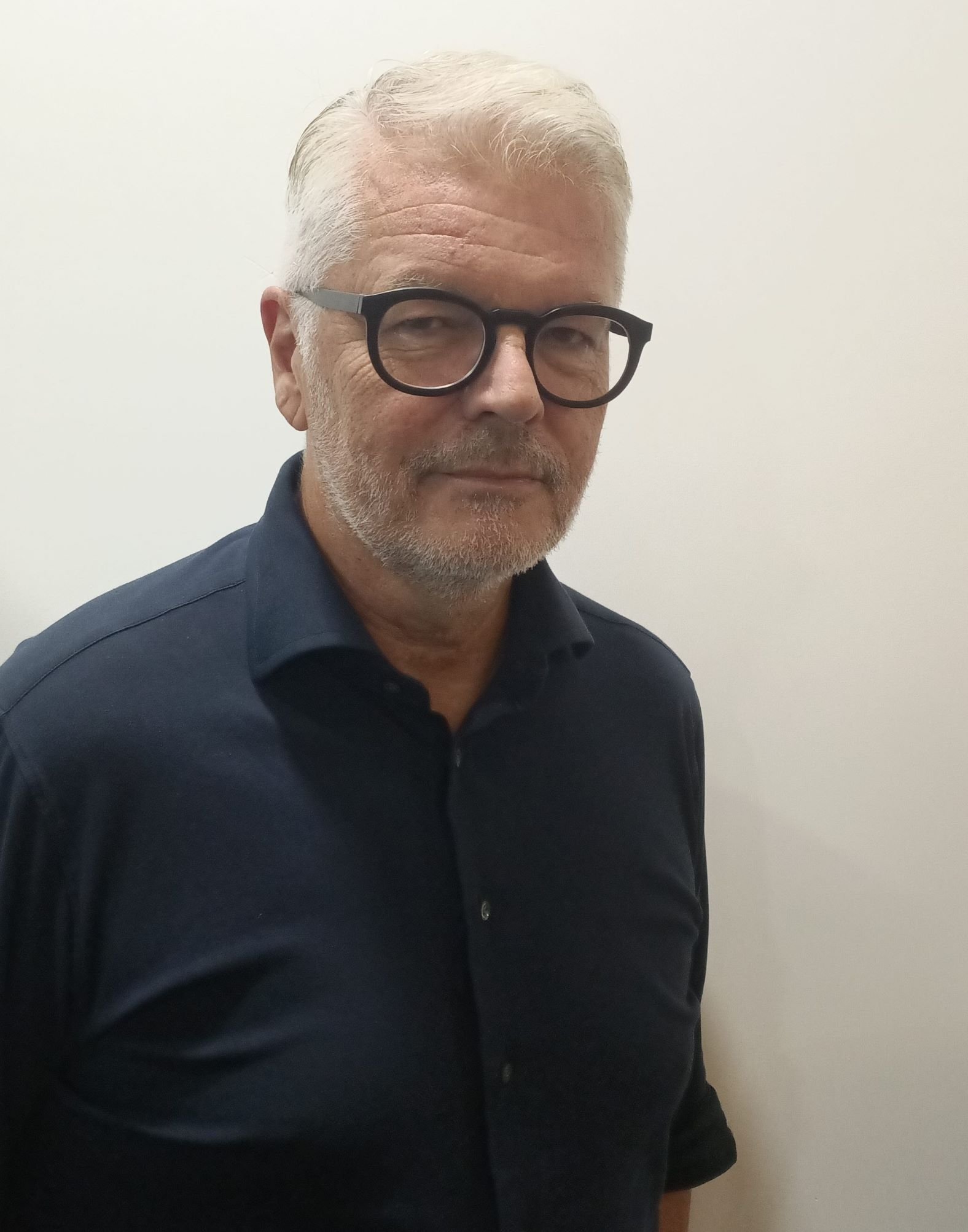
Tenthpin was founded in 2017. Looking back, what has been the journey from those early days to a company of more than 600 people?
It has been an exciting journey. We have had many great opportunities and also many challenges along the way. Some of those challenges eventually turned into opportunities. COVID-19 was one example. At the beginning, everybody in our industry was afraid of what would happen, but ultimately it changed the way we conduct business.
For a small company, that was actually an opportunity to grow further. We had a great team and a very clear focus. When we started in 2017, we had around 15 to 20 people at maximum. Since then, apart from one year in 2023, we have continued to grow.
What were the biggest challenges in building the company during the initial years?
The biggest challenge at the beginning was becoming cash-flow positive. Fortunately, with the clients we had, we were able to achieve that within three to four months.
Beyond that, I think having a very clear but simple strategy was extremely important. We called it our “go-go strategy” — go live, go strong, go deep and go beyond.
“Go live” essentially meant survival: becoming cash-flow positive and creating the foundation to pay salaries and build the business. “Go strong” meant focusing on the areas where we were strong and building a resilient company.
During the first phase, particularly while we were building the first 200 people, the principle was to stay focused on what we knew. We did not want to try too many things or become distracted. Once we had built sufficient strength, we could go deeper into the industry and its specifics and differentiate ourselves.
Today, with our software company, we are taking that philosophy further by going beyond pure consulting and building additional capabilities.
You started with an international footprint rather than building country by country. Why was that important?
We always knew that we wanted to grow internationally, and I was fortunate enough to have done that before. Tenthpin is not my first company.
Our first three markets were the US, Switzerland and Germany. We already had the first 20 colleagues across these three countries, so we started internationally from day one and subsequently expanded into other markets.
Tenthpin operates through a partnership model. How does that influence the way the company is managed?
Partnership is fundamental to our model. We have around 25 partners globally, and each is responsible for a specific area or multiple clients. Everybody is an entrepreneur and everybody has equity in the company.
They are true equity partners, taking their own entrepreneurial and business risk. Our role is to have a clear strategy and a good team, and then allow the organisation to grow.
Importantly, we do not lead the company primarily from a country perspective. Of course, we need legal entities in different countries, but we do not want people competing with each other based on country performance.
So you are effectively managing the business around global clients rather than individual country P&Ls?
Exactly. Technically, we have country P&Ls because we have to invoice from particular countries. But we do not measure people based on the profitability of Switzerland, the UK or India.
We measure performance at the client level. If you look at an account such as AstraZeneca, for example, you may have colleagues from the US, India, the UK, Switzerland and Germany working together. There is a lot of intercompany activity in the background, but what matters to us is the top line and bottom line of the entire account.
That model also prevents competition between countries and keeps everyone focused on the client.
Who are the key clients driving Tenthpin's business?
In terms of revenue, Novartis, AstraZeneca and Ferring are among our largest clients. The other positions vary from year to year. At different times, we have had significant business with companies such as Roche, Amgen, Gilead and BioNTech.
Our top 20 clients generate anywhere between CHF 1 million and CHF 15 million in revenue, so these are long-term relationships rather than short-term engagements.
You now have more than 600 employees. What will determine the next phase of growth?
New technologies will be an important factor. The way we leverage AI within our own delivery model should allow us to grow faster.
Historically, one of the biggest determining factors for growth in our business has been talent availability. With more than 600 people, we are still a small company, particularly compared with the organisations with which we compete.
We compete with the big players—Accenture, Deloitte, IBM, Infosys and others. But because we are very specific and focused, there is still a significant opportunity for us to grow.
How do you compete with organisations that are many times larger than Tenthpin?
Our differentiation is specificity. We are a specialist company and our focus is very clear.
The market does not necessarily have to grow for us to grow. There is a large opportunity because we operate in a specific part of the market where deep expertise matters.
However, we do not want to grow simply for the sake of increasing headcount. Reputation and quality are extremely important to us. If you grow only for the sake of size, eventually you risk losing quality. That is something we cannot and do not want to compromise.
What is the scale you are targeting over the next five years?
If you look at the next five years, I would say we could potentially triple in terms of revenue.
That will require us to enter a few more services and regions. Asia-Pacific is particularly important. We are looking at markets including South Korea, Vietnam and Japan. We have just started in Japan.
The US is also still underrepresented for us compared with the opportunity that market offers. We are also looking at South America, both from a market and resource perspective.
At the same time, I would expect our resource growth to be slower than our revenue growth. If we triple revenue, we may only need to double, or slightly more than double, our resources because new technologies will allow us to grow faster than we can recruit.
Does that make AI a business-growth tool for Tenthpin rather than simply a technology offering to clients?
Absolutely. AI has the potential to change not only what we deliver to clients but also how we deliver it.
The availability of talent has traditionally constrained the growth of a consulting business. If technology can increase the productivity and scalability of our delivery model, we can support more complex work without increasing resources at the same rate.
That is one of the reasons why our investment in technology and software capabilities is so important.
How does the new Innovation Hub in Bengaluru fit into this strategy?
The Innovation Hub is part of that broader direction. Bengaluru provides access to strong technology capabilities and talent, while also giving us an environment in which we can develop solutions for the global life sciences market.
The focus areas include AI, IoMT, ATMPs and intelligent clinical supply chains. We want to build next-generation products and accelerators that can help life sciences companies simplify complexity, meet regulatory requirements and scale efficiently.
It is therefore not only an India-focused centre. The intention is to build capabilities in Bengaluru that can be used across our global business.
What role do you see India playing in Tenthpin's global organisation?
India is becoming increasingly important. It provides access to strong talent, technology capabilities and an ecosystem that can support our global delivery model.
The opportunity is not simply to use India as a resource centre. We want India to contribute to the development of capabilities that can be deployed globally.
That is particularly relevant for AI, software development and some of the technology-enabled solutions we are building.
Tenthpin is also looking at advanced therapies, including ATMPs. What are the opportunities and challenges you see in this space?
Advanced therapies are becoming increasingly important, but they also introduce a very different level of complexity across development, manufacturing, supply chain and regulatory processes.
This is where technology can play a significant role. We want to help organisations manage that complexity, from early-stage research and process optimisation through scale-up, manufacturing and regulatory readiness.
The objective is to help companies make faster decisions, improve reproducibility and use resources more efficiently while maintaining the quality and compliance requirements that are essential in life sciences.
With the consulting industry becoming increasingly technology-led, where do you see Tenthpin five years from now?
I see us as a company that combines deep life sciences expertise with technology much more strongly than today.
We will continue to be a specialist organisation, but our capabilities will extend beyond traditional consulting. AI, software and other technologies will become increasingly embedded in how we work and in what we offer clients.
At the same time, we have to maintain our focus. Growth should not dilute the qualities that made us successful in the first place: being specific, going deep into the industry and delivering quality.
That balance between scale and specialisation will be one of the most important challenges—and opportunities—for Tenthpin in the years ahead.
Narayan Kulkarni
narayan.kulkarni@mmactiv.com