Innovation in CAR T-Cell Therapy: Making Treatment Faster and More Accessible
September 24, 2026 | Thursday | News
From point-of-care manufacturing to faster, automated production, CAR T-cell innovation is tackling the logistical, cost and access barriers that still stand between breakthrough science and patients.
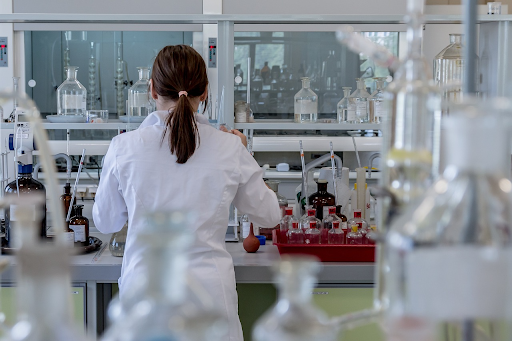
Photo source: Pixabay
The science behind car t-cell therapy has already been proven. What's harder now is the logistics side of things; actually getting this treatment to more patients, faster, without the process turning into a barrier of its own. A lot of the newest work in the field is focused right there.
The Manufacturing Bottleneck
Traditionally, this kind of therapy has meant a pretty involved process. A patient's T-cells get collected, shipped to a specialized facility, genetically modified, grown in large enough numbers, then shipped back to be infused into the patient. The whole cycle can take a few weeks, sometimes longer if anything gets delayed along the way.
For patients, that wait isn't just an inconvenience. Aggressive cancers don't always allow for that kind of timeline, and some people need bridging treatments just to hold steady while their cells are being prepared somewhere else entirely. It's one of the most practical hurdles the field has been trying to work around.
Point-of-Care Production: A Different Approach
One of the more interesting shifts happening now is the move toward point-of-care manufacturing. Rather than sending cells across the country, or overseas, to a centralized lab, some hospitals are building out the ability to modify and grow T-cells on site, right where the patient is being treated.
It's not just a convenience thing either. When cells don't have to travel as far, there's less chance for delays, shipping costs drop, and patients who don't have weeks to spare may get their treatment sooner. It also means smaller or more remote medical centers could eventually offer this kind of care without leaning entirely on a handful of centralized hubs somewhere else.
This approach is still fairly new in a lot of places, and setting up the infrastructure and training staff isn't a small task. But more centers are exploring it each year, and the direction things are heading is pretty clear.
Making the Process Faster
Beyond where manufacturing happens, there's work being done on how long it actually takes. Researchers have been testing streamlined protocols that shorten the time cells spend growing in the lab, and some newer techniques suggest a faster production window doesn't necessarily mean a weaker end product.
Automation is playing a role too. Manual steps used to slow things down and left more room for inconsistency between batches. Automating parts of that process is helping things run more consistently, and it's also a piece of what's needed to scale up production as more patients seek out this treatment.
Why Accessibility Matters So Much Here
None of this innovation counts for much if patients still can't get the treatment. Cost, geography, and the general complexity of coordinating care have all limited access in different ways, which is a big reason so much current research is focused on simplifying the process itself, not just improving it in a lab somewhere.
As manufacturing gets faster, more localized, and less reliant on shipping cells long distances, the hope is that more patients, in more places, will be able to access this treatment when they actually need it. It's not a solved problem yet, but it's moving in a more practical, more accessible direction than it was even a few years back.