Duo wins Nobel Prize in Chemistry 2026 for their work on homochirality

October 08, 2026 | Thursday | News

For the discovery of non-linear effects and autocatalysis in asymmetric organic synthesis

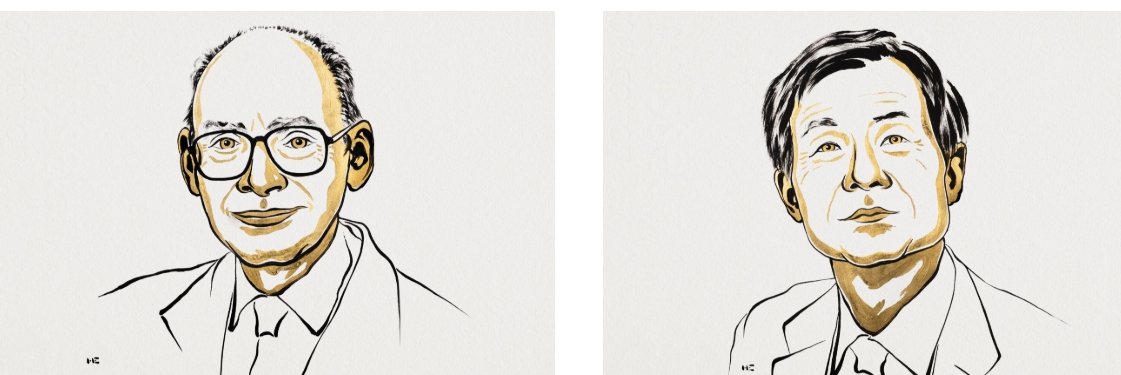
The 2026 Nobel Prize in Chemistry was awarded to Henri B. Kagan (an emeritus professor at the Université Paris-Sud in France) and Kenso Soai (a Japanese organic chemist, Professor Emeritus in the Department of Applied Chemistry at Tokyo University of Science) for the “discovery of non-linear effects and autocatalysis in asymmetric organic synthesis.”

Henri Kagan took the first decisive step in 1986, when he discovered a new way of manipulating chemical reactions. This allowed him to create a greater excess of one of the mirror images than had previously been thought possible.

Kenso Soai took the next step. In 1995, a key publica tion describes how he designed the first ever chemical reaction that had the potential to be homochiral. In 2003, he finally succeeded. He presented a reaction in which only one of the two possible mirror images was formed. Other than life itself, no one had previously achieved this feat.

Thanks to Henri Kagan and Kenso Soai, we now know how homochirality can emerge. Their discoveries have been decisive for chemists who design reactions for the manufacture of pharmaceuticals.

The Nobel Prize in Chemistry 2026 recognises discoveries that have enabled chemists to drive chemical reactions that lead to homochirality.

Comments

× Your session has expired. Please click here to Sign-in or Sign-up

Have an Account?

OR

Forgot your password?

OR

First Name should not be empty!

Last Name should not be empty!

Email address should not be empty!

Show Password should not be empty!

Show Confirm Password should not be empty!

Newsletter

E-magazine

Biospectrum Infomercial

Bio Resource

I accept the terms & conditions & Privacy policy