"Establishing the concept's viability and demonstrating clear advantages over existing diagnostics are crucial to industry interest and market entry"
October 24, 2026 | Saturday | Views | By Mansi Jamsudkar Padvekar
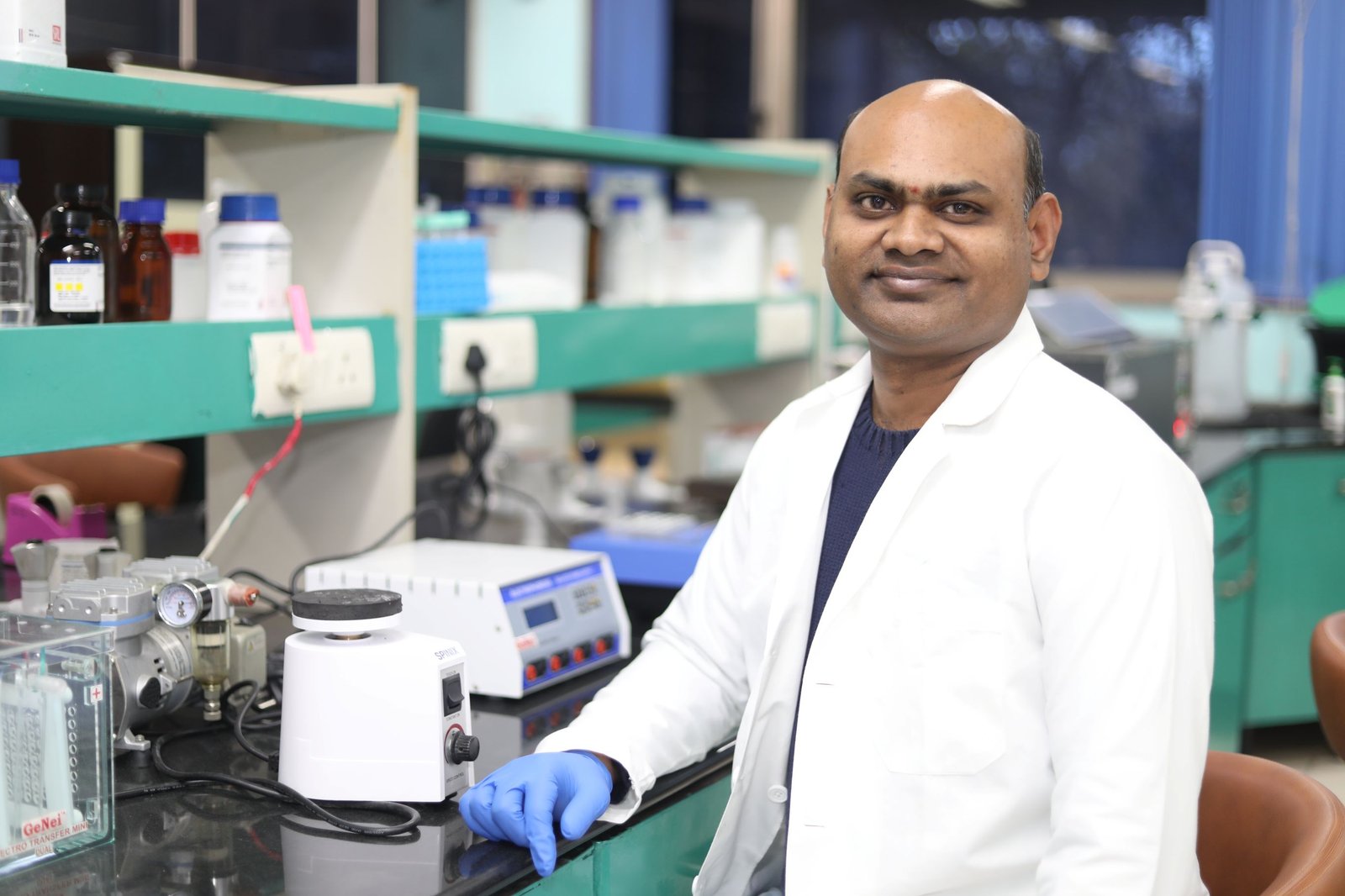
The convergence of diagnostics and therapeutics is creating new opportunities for more targeted disease detection and treatment. At CSIR-Central Drug Research Institute (CDRI), researchers are exploring a drug-diagnostic approach that could transform existing drug molecules into traceable probes for applications including cancer detection and disease monitoring. Led by Dr Suresh Kalangi, Scientist C in collaboration with interdisciplinary research groups, the programme is currently focused on establishing proof-of-concept data, including work on an FDA-approved molecule being modified into an aggregation-induced emission (AIE) probe for cancer-cell detection. Dr Kalangi discusses the technology’s translational potential, funding needs, industry partnerships and the pathway towards clinical validation and commercialisation.
What level of funding currently supports your work in diagnostic drugs and theranostics, and are you looking to secure additional government or industry funding to advance these technologies towards product development?
Currently, we are working on generating proof-of-concept (PoC) data with intramural/institutional funding support. We are in the process of securing additional funding through Government programmes in upcoming calls. In addition, our lab at the CSIR-CDRI is collaborating with ICT Mumbai and encouraging other research groups to submit their compounds for drug-diagnostic screening at CSIR-CDRI.
How many diagnostic drug, theranostic or probe-based candidates are currently being developed from your broader research programme, and how many do you expect to move towards validation or product development in the next 2–3 years?
The drug diagnostic concept originated from a coffee-table discussion among interdisciplinary research colleagues: Dr Suresh Kalangi (Biologist), Dr Tejender S. Thakur (Crystal engineering research group) from CSIR-CDRI, and Dr Rajesh Bhosale (Supramolecular and synthetic chemistry group, Ganpat University). The idea was to transform existing drugs into probes to rapidly identify therapeutic solutions in unprecedented situations, such as during the COVID-19 pandemic. As a newly joined scientist at CDRI, Dr Kalangi’s lab has incubated this idea with colleagues as a platform technology and a key focus of his research. As a foundation, we could successfully articulate the concept and communicate our intent to the scientific community through our conceptual paper (Chem. Biomed. Imaging 2026, 4, 1248). Currently, we are working with an FDA-approved molecule to modify it into an Aggregation-Induced Emission (AIE) probe that specifically detects cancer cells. In the next 2-3 years, we hope to achieve PoC and build scientific support for the concept. This will allow us to secure funding to embark on product development.
The paper discusses the potential of combining diagnostic and therapeutic functions in a single platform. Which applications do you see as having the strongest near-term commercial potential, cancer, infectious diseases, imaging, drug monitoring, or another area?
The potential of this platform is not limited to the areas discussed above. Drug diagnostics leverage the specificity of approved drugs, making them traceable and enabling the development of point-of-care diagnostics or tracking disease progression in systemic diseases like cancer. But as mentioned in our conceptual review, associated challenges, such as a loss of drug specificity or target affinity after adding the probe, may need to be addressed.
Are any of the technologies or candidates emerging from your research currently being evaluated with pharmaceutical, diagnostic, biotech, or imaging companies? If not, are you actively looking for industry partners?
Currently we have not reached that level yet. Once we have PoC, we will look for industry partners. At CSIR-CDRI, we are dedicated to translational research and development, and we welcome partnerships.
What kind of industry partnership would be most valuable at this stage? Funding, access to specialized equipment, scale-up and manufacturing capabilities, preclinical validation, clinical development, or regulatory expertise?
Once after we have established PoC, we would be looking for an equipment setup to screen a large number of samples of AIE probes.
The paper highlights newer approaches such as AIE-based probes and drug conjugates. What would be the next step required to move these concepts from research-stage technology towards a commercially viable diagnostic or theranostic product?
We are currently in the early stages and looking to establish a PoC for at least one molecule. Rigorous evaluation and optimization are required to meet the performance characteristics of a clinically useful diagnostic. Moreover, clinical validation will be essential for such a product to be commercially viable.
From an industry perspective, what are the biggest bottlenecks preventing promising diagnostic-drug technologies from reaching the market in India?
Establishing the concept's viability and demonstrating clear advantages over existing diagnostics are crucial to industry interest and market entry, aligning with the healthcare sector's unmet needs.
How do you see India's diagnostic and pharmaceutical companies participating in the emerging theranostics market? Are Indian companies currently equipped to develop and manufacture these more complex diagnostic-drug platforms?
The field is growing, and companies are investing in molecular diagnostics and targeted radio-ligand therapies. There is also interest in nano-theranostics, which combine nanoparticles with molecular imaging. Hospitals are also showing an interest in this area. Given the promise of such technologies, we are hopeful that Indian companies will adopt these complex platforms.
Mansi Jamsudkar Padvekar
mansi.jamsudkar@mmactiv.com