How Precision Chemistry in Nobel-2026 can power pharma exports and national innovation
October 21, 2026 | Wednesday | Views | By Professor Vidya Avasare, Department of Chemistry, Ashoka University
India can strengthen sovereign supply chains, boost high-value exports, and secure its place at the forefront of global pharmaceutical innovation
Asymmetric synthesis is a mature field in the construction of small to complex organic molecules. Why, then, was the 2026 Nobel Prize in Chemistry awarded to Henri B. Kagan and Kenso Soai for their discoveries regarding non-linear effects and asymmetric autocatalysis? How does it bring a fresh perspective to asymmetric synthesis and boost innovation in pharma industries?
Their discovery stems from nature’s unmatched selectivity, observed in amino acids, carbohydrates, and complex natural products. For example, while the anticancer agent Taxol and the complex alkaloid strychnine mathematically possess 2,048 and 64 theoretical stereoisomers, nature exclusively synthesizes a single enantiomer without using complex transition metal catalysts or intricate ligands. How does nature yield only one mirror-image/optical isomer while suppressing the other? This breakthrough is at the core of the 2026 Nobel Prize.
Although Soai published his pioneering Nature paper on asymmetric autocatalysis nearly 30 years ago in 1995, the concept stems from Frank’s 1953 model showing how mutual inhibition and autocatalysis amplify tiny stochastic fluctuations into a single isomer. By utilising an initial product with as little as 2% enantiomeric excess, the system self-amplifies throughout the reaction, completely eliminating the need for external chiral ligands, organocatalysts, or transition metal complexes.
To understand the value of their work, we must look back at history. The tragedy of thalidomide highlighted the critical importance of stereochemistry in drug design: while the (R)-enantiomer acted as a safe sedative, the (S)-enantiomer proved to be severely teratogenic, leading to severe birth defects. This disaster transformed pharmaceutical standards, making it mandatory for the industry to synthesise and evaluate optically pure compounds ensuring that only the single, biologically active enantiomer is delivered rather than a racemic mixture. Subsequent breakthroughs in asymmetric catalysis have dramatically impacted drug manufacturing by enabling single-enantiomer production.
However, as shown in Table 1, comparing these paradigm-shifting discoveries reveals unique pros, cons, and trade-offs across transition metal catalysis, organocatalysis, and non-linear asymmetric autocatalysis. Although used commonly and reliably, traditional chiral catalysts often face industrial limitations due to the high cost of synthesizing complex chiral ligands or noble metal complexes. Beyond expense, catalyst toxicity poses a major risk of heavy metal contamination in final drugs.
Furthermore, most homogeneous catalysts are difficult to recycle meaning they are synthesised, used once, and discarded as toxic waste. This exact industrial bottleneck is where the groundbreaking work of Henri Kagan and Kenso Soai opens an ambitious new frontier. By uncovering non-linear effects and asymmetric autocatalysis, their work demonstrates how exceptionally high enantiomeric purity can be generated while drastically minimizing unwanted side products and waste, much like nature does.
Honest reflection reminds us that a Nobel Prize does not transform an industry overnight. At many instances, such awards do not deliver immediate, off-the-shelf factory blueprints. Instead, their true power lies in breaking scientific boundaries, sparking new ideas, and establishing the beginning of a new technological era. While non-linear autocatalysis is currently limited to specific reactions, there is immense scope to expand these concepts to synthesize complex, pharmaceutically significant compounds at scale.
For India, this is a pivotal moment to capture. A large volume of Indian chiral API production still relies on traditional resolution techniques, which are energy-intensive, costly, and generate substantial chemical waste. While Europe, Japan, and the US hold majority ownership over patented chiral ligands and noble transition-metal catalysts, Indian manufacturers have historically depended on importing expensive chiral synthons or employing resolution steps that discard the undesired isomer as waste. This structural gap is precisely why adopting breakthrough concepts like non-linear effects and asymmetric autocatalysis, the Kagan-Soai principles is critical.
By reducing or eliminating reliance on costly, single-use metal catalysts and imported chiral ligands, Indian API manufacturers can drastically lower production costs, minimise environmental waste, and expand their global market share from ~15% toward leadership in high-value chiral drug discovery and CDMO exports.
Unlocking this "India Advantage" requires treating this scientific shift as a long-term strategic investment rooted in deep industry-academia collaboration. By bringing these precise chemistry techniques from fundamental theory down to the root level of our manufacturing plants, India can strengthen sovereign supply chains, boost high-value exports, and secure its place at the forefront of global pharmaceutical innovation. In my opinion, this marks the true beginning of non-linear autocatalysis in industrial applications, we must take a lion's leap to expand this idea to elevate our global contribution.
Table 1: Comparison of Nobel Prize-Winning Asymmetric Catalysis
|
Parameters
|
Asymmetric Transition Metal Catalysis
|
Asymmetric Organocatalysis
|
Asymmetric Autocatalysis
|
|
Recognition
|
2001 Nobel Prize
|
2021 Nobel Prize
|
2026 Nobel Prize
|
|
Primary Catalyst Source
|
Transition metals coordinated with complex chiral ligands
|
Small chiral organic molecules directly from nature like proline without metal ions
|
The reaction product itself is a catalyst
|
|
Synthesis & Material Cost
|
Very High due to precious metals and complex ligands
|
Low to Moderate: Readily available from natural chiral pool molecules
|
Almost Zero: No external chiral metal or ligand
|
|
Purity Needed
|
High (>98% ee)
|
High (>95% ee)
|
Low (<2% ee or traces)
|
|
Catalyst Loading
|
Low to moderate (typically 0.1 to 10 mol%)
|
High (often 10 to 20 mol%)
|
Negligible / Traces
|
|
Productivity (TOF / TON)
|
Very High: Fast reaction kinetics, high turnover frequencies (TOF) and turnover numbers (TON)
|
Low to Moderate: Slower reaction speeds; higher reaction times required
|
Exponential Rates: Characterised by an induction phase followed by exponential acceleration as catalyst concentration increases
|
|
Recyclability
|
Difficult & Expensive
|
Moderate to Difficult
|
Self-Resolving: The catalyst is the product
|
|
Toxicity & Heavy Metal Residue
|
High Concern: Severe risk of toxic heavy metal contamination in final Active Pharmaceutical
|
Low Toxicity: Environmentally benign; no heavy metals involved
|
Low to Variable: Depends only on the main reagents/substrates involved, avoiding toxic precious metal contamination
|
|
Environmental Impact & Waste (E-factor)
|
High: Heavy metal extraction, ligand synthesis waste, and single-use disposal create high environmental burdens
|
Low: Green chemistry credentials; biodegradable and non-metal reagents
|
Very Low: Eliminates dedicated catalyst manufacturing streams and minimises toxic waste generation
|
|
Substrate Scope & Applicability
|
Extremely Broad: Handles a vast array of transformations (hydrogenations, cross-couplings, C–H activations)
|
Broad: Excellent for aldol, Mannich, conjugate additions, and organo-reductions
|
Currently Specialised: Scope is currently restricted to specific self-amplifying systems (e.g., dialkylzinc additions to aldehydes)
|
|
Sensitivity to Air & Moisture
|
Extremely high
|
Low
|
Moderate to High: Depends on the organometallic reagents used in the specific reaction manifold
|
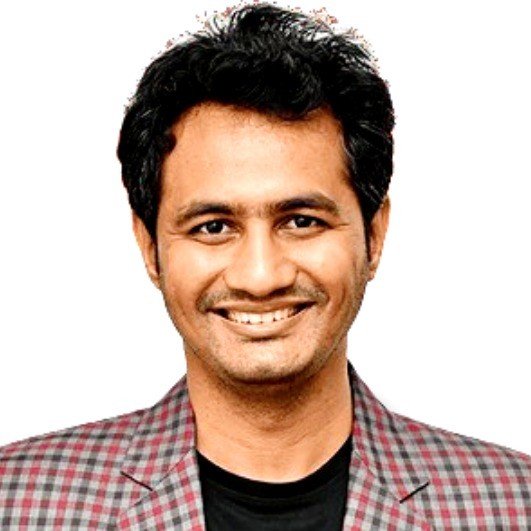
Professor Vidya Avasare, Department of Chemistry, Ashoka University
(The views expressed in this article are the author's personal opinions and do not necessarily reflect those of Ashoka University)