“Dependence on China for certain raw materials remains a vulnerability”
March 01, 2026 | Sunday | Views | By Dr Manbeena Chawla
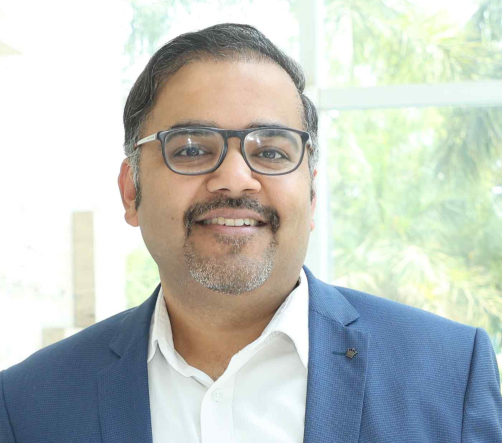
Jubilant Biosys - a Noida-based Contract Research, Development, and Manufacturing Organisation (CRDMO), a vertical of Jubilant Pharmova - operates across drug discovery services and the CDMO–API business, with a focus on integrated chemistry-led solutions that support programmes from early discovery through scale-up. To enhance its focus on the Active Pharmaceutical Ingredients (API) business, Jubilant Pharmova has recently transferred its API business to Jubilant Biosys. To find out more about the company’s growth plans and the current challenges facing the CRDMO sector in India, BioSpectrum India interacted with Dr Tushar Gupta, Chief Operating Officer, Jubilant Biosys to learn more about the company’s growth plans and the current challenges facing the CRDMO sector in India.
What are the key plans for Jubilant Biosys in 2026?
The focus, in 2026, is on scaling the CRDMO platform in line with demand visibility while deepening lifecycle capabilities for global innovators. A major priority is furthering the new greenfield discovery and CDMO facility near Bengaluru airport, which represents a significant capacity expansion. Designed to support larger and longer-duration programmes, the new site will complement the existing discovery, development, and manufacturing network, enabling Jubilant Biosys to meet growing programme complexity and volume without compromising execution timelines.
The company will also continue investing in productivity, automation, and capability enhancement across the CRDMO value chain - particularly in discovery-led services, process development, and clinical-to-commercial scale-up. The goal is to further strengthen the “follow-the-molecule” model, enabling faster decision-making and earlier cost optimisation for customers.
Geographically, Jubilant Biosys plans to deepen its strong presence in the US and expand its engagement with European innovators, where purchasing decisions for complex innovation-led programmes often originate. With a rising share of revenue from Europe and increasing traction with large pharma, the 2026 focus remains on strengthening strategic partnerships rather than broadening the customer base indiscriminately.
How did you strengthen the CRDMO business in recent years to expand partnerships with large pharma?
Through scaled infrastructure, lifecycle integration, and targeted capability enhancements to support long-term partnerships with large pharma, we could strengthen the CRDMO business. The business operates through a diversified network of discovery, development, and manufacturing sites - including discovery centres in Greater Noida, Bengaluru, and France; a CDMO facility in Noida; and large-scale API and Phase II–III manufacturing operations in Mysore. This integrated footprint enables seamless movement of programmes across stages without changing vendors - an increasing priority for large pharma seeking scientific continuity and reduced execution risk.
Capacity expansion has been closely aligned with customer demand. The new greenfield discovery and CDMO facility near Bengaluru airport - with an investment of over $120 million, is designed to increase capacity and reflects strong visibility into multi-year pipelines from global innovators. Parallel investments in automation and productivity further reinforce the ability to support larger, more complex programmes.
Capabilities have also been upgraded in line with infrastructure growth. By integrating discovery, clinical development support, and API manufacturing, Jubilant Biosys maintains chemistry and process ownership from early research through commercial scale-up. This has enabled deeper, multi-stage engagements with large pharma customers, replacing isolated project-based work with long-term strategic partnerships.
Why are global pharma and biotech companies increasingly moving towards integrated CRDMO models, and how is Jubilant Biosys aligned with this shift?
In recent years, drug development outsourcing has shifted from volume-driven CRO/CDMO models to partnership-led engagement, driven by the need for speed, continuity, and supply-chain resilience. Innovators, today, prefer fewer partners who can support a molecule across its lifecycle, retain process knowledge, and enable cost optimisation as programmes scale. China Plus One strategy, increasing regulatory scrutiny, and the complexity of emerging modalities have further accelerated this shift. Fragmented outsourcing often slows development and dilutes accountability, making integrated CRDMO models more attractive for their ability to compress timelines, preserve scientific context, and reduce execution risk from discovery through commercialisation.
We're aligned with this evolution by structuring its CRDMO model around lifecycle continuity rather than stage-specific services. By integrating drug discovery, clinical development support, and API manufacturing, the same scientific teams remain involved from early chemistry through clinical phases and into commercial scale-up. This ensures faster clinical supply, smoother process optimisation, and more cost-efficient manufacturing decisions as programmes mature. The model has contributed to strong customer traction, including on-boarding global pharma clients seeking to de-risk supply chains and consolidate partners. Investments in automation, expanded discovery and CDMO capacity, and a growing European presence further reinforce this integrated approach. Essentially, the model mirrors how innovators now prefer to work: fewer partners, deeper integration, and long-term accountability.
How is the China-plus-one strategy influencing global innovators’ engagement with Indian CRDMOs such as Jubilant Biosys?
Global innovators increasingly view India as a parallel execution base rather than a peripheral outsourcing destination, and this shift is clearly reflected in how they engage with CRDMOs such as Jubilant Biosys. In the past year, several top-tier global pharma companies have initiated discovery-led programmes with the explicit objective of reducing dependence on China. These engagements are broader in scope, longer in duration, and more strategically significant -signalling that India is now being trusted with mission-critical work, not just contingency assignments.
The scope of work being consolidated in India has also expanded. At Jubilant Biosys, customers are increasingly combining discovery, clinical development support, and API manufacturing within a single relationship instead of distributing stages across geographies. This aligns with a China plus one mindset focused on maintaining continuity of chemistry and process knowledge as programmes scale, eliminating the need to re-qualify vendors at every stage. As a result, there has been a clear rise in multi-stage programmes and improved revenue quality, reflected in strong year on year growth and margin expansion.
China plus one is also influencing innovators’ willingness to anchor long-term capacity in India. Greater demand visibility from diversified supply chains has supported significant capital commitments - most notably Jubilant Biosys announced investment of over $120 million in a new discovery and CDMO facility near Bengaluru, which will further expand capacity.
What are the major challenges and opportunities facing India’s CRDMO sector?
India’s CRDMO sector is at an inflection point, with both opportunity and challenge emerging from the same global forces. On the opportunity side, sustained interest from innovators seeking to diversify supply chains has generated strong demand across discovery, development, and manufacturing. India’s deep chemistry capabilities, large scientific talent pool, improving automation, and growing regulatory maturity are helping CRDMOs move up the value chain and take on more strategic, lifecycle-critical work. The supporting ecosystem is also strengthening, with better availability of KSMs and intermediates and rising investments in advanced modalities - positioning India as a credible parallel execution hub.
At the same time, challenges are largely structural and execution-led. Productivity and speed remain key differentiators versus Chinese CROs, which historically invested earlier and more aggressively in automation and capacity. While the gap is narrowing, sustained investment is required to consistently match turnaround times, especially in early discovery. Dependence on China for certain raw materials - particularly fermentation-based intermediates and specific KSMs - remains a vulnerability despite ongoing diversification efforts.
Ultimately, long-term success will depend on how effectively Indian CRDMOs address these challenges. Companies that invest in automation, maintain scientific continuity across the molecule lifecycle, and expand capacity in line with customer pipelines - such as Jubilant Biosys -are best positioned to capture durable growth.
Dr Manbeena Chawla
(manbeena.chawla@mmactiv.com)