‘India Pharma 2026’ concludes with strong call for enhanced funding, infrastructure and speed to drive pharma innovation
April 14, 2026 | Tuesday | News
India must proactively position itself in the evolving global pharmaceutical landscape to remain competitive and relevant: Joint Secretary, Department of Pharmaceuticals
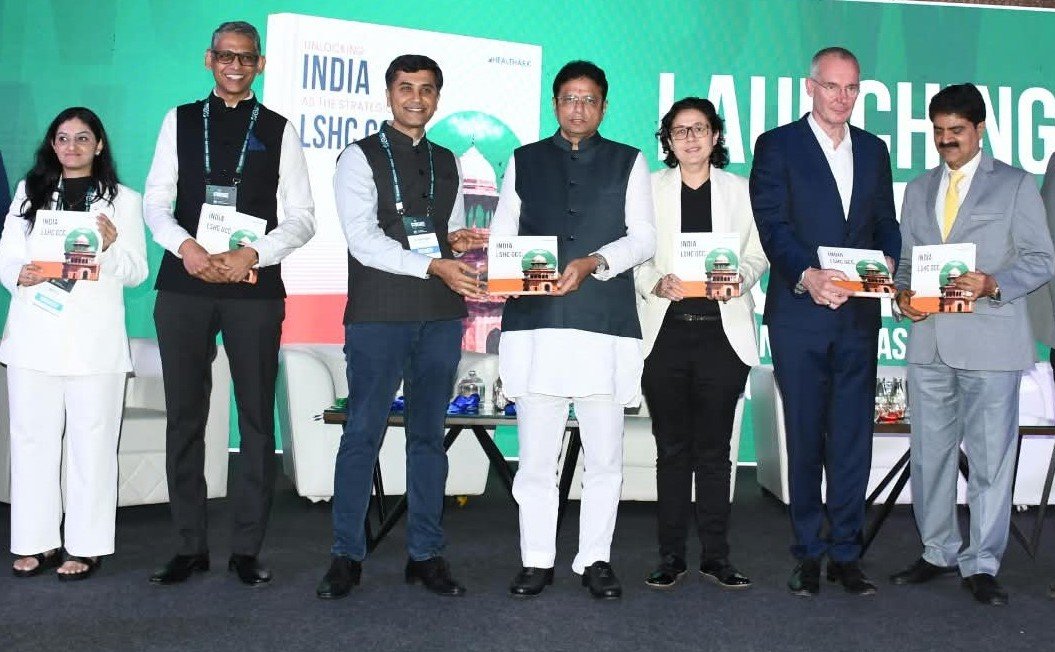
The 9th edition of ‘India Pharma 2026’, the flagship event of Department of Pharmaceuticals, Ministry of Chemicals and Fertilizers, Govt of India, concluded after two days of extensive deliberations on strengthening India’s pharmaceutical and biopharma ecosystem.
The event witnessed participation from over 800 delegates, with more than 60 speakers engaging across 10 sessions, supported by over 20 partner organisations, reflecting the growing importance of the platform in shaping the sector’s future trajectory.
Delivering the valedictory address, Satyaprakash T L, Joint Secretary, Department of Pharmaceuticals Ministry of Chemicals and Fertilizers, Govt of India, said that discussions across sessions converged around three critical enablers for the next phase of growth—funding, infrastructure and speed.
While stakeholders expressed views on prioritisation, there was a shared understanding that coordinated action across government, industry and academia is essential.
Emphasising the urgency of collaboration, Satyaprakash noted that India must proactively position itself in the evolving global pharmaceutical landscape to remain competitive and relevant.
Reflecting on the broader evolution of India’s biotechnology and pharmaceutical ecosystem, Dr Renu Swarup, Former Secretary to Govt of India, Department of Biotechnology, Ministry of Science & Technology while addressing session on ‘Reflections and Big Moves to Leapfrog Innovation’, emphasised that the country has made significant strides in building a comprehensive innovation value chain over the past decade, spanning discovery, development and deployment. India has successfully strengthened linkages between academia and industry, which were earlier fragmented, and has created a more cohesive ecosystem for product development. Drawing on the experience of the COVID-19 pandemic, she described it as a testbed that validated India’s capabilities in areas such as financing, partnerships, infrastructure and rapid innovation. India’s bioeconomy, she added, has already surpassed earlier targets and reached approximately $195 billion, underscoring the sector’s growth momentum and future potential.
Pankaj Patel, Past President, FICCI and Chairman, Zydus Lifesciences, articulated a long-term vision of developing 100 new drugs by 2047. He stressed that achieving this goal would require a significant increase in research and development investments, with industry spending needing to rise from the current 6–7 per cent to 12–15 per cent. He highlighted the importance of creating appropriate incentive structures for academia and government research institutions to enhance productivity and innovation outcomes.
Winselow Tucker, Co-Chair of the FICCI Pharma Committee and President and General Manager, Eli Lilly India, highlighted that successful transformation in the pharmaceutical sector requires a clear strategic intent supported by a phased roadmap with well-defined milestones. Drawing from international experiences, he observed that countries that have succeeded in building strong innovation ecosystems have focused on improving regulatory efficiency, reducing approval timelines and creating enabling frameworks for investment.
Dilip Shanghvi, Executive Chairman, Sun Pharmaceutical Industries Ltd, said that while India has made significant progress as a global leader in generics, there remains considerable scope to strengthen innovation capabilities. He pointed out that innovation in pharmaceuticals involves high-risk investments with long gestation periods, requiring shared responsibility between government and industry.
Other speakers at the conference highlighted the importance of strengthening the financing ecosystem to support innovation. Dr Shivkumar Kalyanaraman, Chief Executive Officer, Anusandhan National Research Foundation (ANRF), outlined the evolving research funding architecture, noting that it combines grant-based support for academia and not-for-profit institutions with capital-based instruments for the private sector.
Industry participants also underscored India’s potential to emerge as a global leader in affordable innovation. It was noted that advanced therapies for complex diseases, which cost up to $500,000 globally, are being delivered in India at a fraction of the cost through innovative approaches, demonstrating the country’s capability to develop scalable and cost-effective solutions for both domestic and international markets.
The deliberations further underscored the need to strengthen regulatory harmonisation, enhance translational infrastructure, deepen industry–academia collaboration and ensure sustained high-risk investments to support the development of innovative therapies. Participants emphasised that addressing these gaps in a coordinated manner will be essential for India to transition from a volume-driven pharmaceutical sector to a high-value, innovation-led global hub.