India is emerging as a global research hub for diabetes: Dr Jitendra Singh
November 21, 2026 | Saturday | News
Dr Jitendra Singh informed that more than a dozen research projects related to diabetes are underway
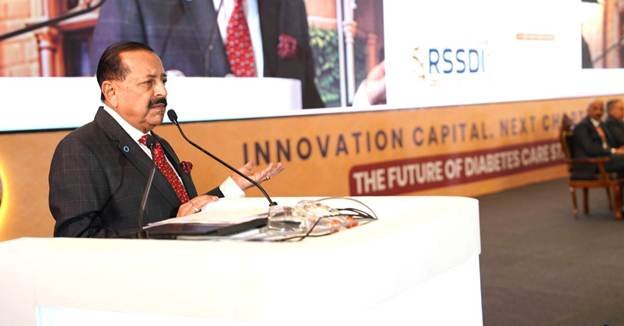
image credit- pib
Union Minister Dr Jitendra Singh, Ministry of Science and Technology, said that India is emerging as a global research hub for diabetes, genetic disorders, and next-generation health solutions. More than a dozen diabetes-related research projects are currently underway under the Ministry of Science and Technology, primarily through the Department of Biotechnology (DBT) and to a lesser extent CSIR.
Dr Jitendra Singh was addressing the inaugural ceremony of RSSDI-2026, being held in Bengaluru from November 19-22. Leading diabetologists, clinicians, researchers, academics, and health professionals from India and abroad are participating in the conference.
One of the major ongoing research initiatives is an India-Denmark collaborative study investigating India-specific alterations in the gut microbiota in prediabetic and diabetic patients. This study aims to advance understanding of the role of gut microbial patterns in metabolic disorders.
Another DBT-supported study involves genetically modified E. coli Nissle 1917, capable of producing GLP-1, and has the potential to be developed as a probiotic-based approach to delivering therapeutic molecules through the digestive tract, with human studies anticipated.
Research at BRIC-THSTI is also studying the expression of GLP-1 analogs in gut-associated bacteria to discover new ways to deliver GLP-1-based therapies.
The Union Minister also mentioned research on interventions to reduce cardiovascular metabolic risks from conception to early childhood, including childhood blood sugar, blood pressure, and obesity, as well as the ongoing EINSTEIN study in rural Mysuru.
Highlighting other ongoing projects, Dr Jitendra Singh described research integrating exosomal profiling and metabolomics to identify biomarkers for predicting type 2 diabetes in women with a history of gestational diabetes; studies investigating the link between type 2 diabetes and metabolic dysfunction-associated fatty liver disease (MAFLD), including the S100A6 pathway and the development of a potential neutralizing monoclonal antibody; and research on hyperinsulinemia, hepatic Sirti-1, and systemic insulin resistance. He also mentioned studies on ribosomal proteins and insulin signaling, and research exploring arachidonic acid for its potential to improve glucose regulation while protecting skeletal muscle from diabetes-related atrophy.
The Minister cited new research on macrophage GI signaling, which could be a potential target for treating obesity and type 2 diabetes.
He also mentioned efforts to develop temperature-resistant insulin, which would facilitate its storage and transportation. He also mentioned research by startups working on oral insulin.