Deliberating the Future of Research, Innovation and Collaboration in India
February 09, 2026 | Monday | News | By Sanjiv Das
Experts at Manthan 2026 shared their perspectives with BioSpectrum India on the future of research and innovation across vaccines, antibiotics, and the biopharmaceutical sector
Manthan 2026, a day-long symposium focused on advancing dialogue around India’s clinical research and life sciences R&D ecosystem, brought together leading voices from the medical and pharmaceutical fraternity in Mumbai. Eminent leaders, policymakers, and industry experts convened to deliberate on the future of research, innovation, and collaboration in the country.
Experts from the antibiotics, biopharma, and industry associations shared their insights in exclusive interactions with BioSpectrum India.
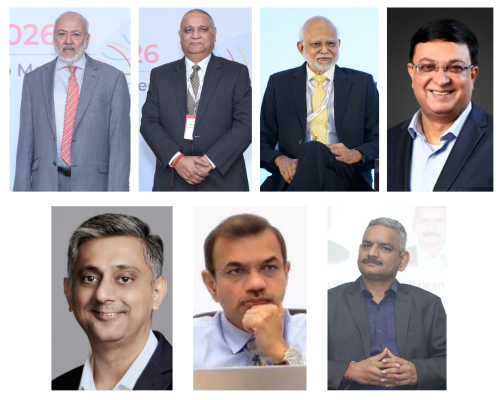
Dr Habil Khorakiwala, Founder and Chairman, Wockhardt, emphasised the need for a completely new approach to research, driven outside the existing systems. Speaking on recent developments in antibiotic research in India, he noted that new drugs currently in the pipeline are in early stages of development and are expected over the next four to five years. “Over the next 10–15 years, new drugs will be launched in the market,” he said.
Addressing concerns around antibiotic misuse, Dr Khorakiwala remarked, “I don’t think unprescribed antibiotic consumption by patients is very high. It is a popular myth. If you look at the data, it is only a few percentage points. This happens across therapy areas. Doctors often have limited choices and prescribe antibiotics. Ideally, prescriptions should be supported by diagnostics.”
According to Dr Sanjay Singh, CEO, Gennova Biopharmaceuticals, infectious diseases and oncology represent areas where the biggest innovations are expected. Commenting on the future of India’s biotherapeutics sector, he said, “It is a sunrise sector for the country. With the Department of Biotechnology playing a leading role, India has progressed rapidly in biosimilars and is now moving towards innovation-driven pharma.”
Highlighting the need for an efficient regulatory framework, KG Ananthakrishnan, former Director General, OPPI, stressed the importance of a fast-track mechanism for research approvals. “ Establish a process with limited overlaps and well-defined timelines, that will enable quicker approvals would be a significant step in accelerating research in bio pharma sector,” he said.
Ananthakrishnan also underlined the need for industry-ready talent aligned with the current need of the industry in research, development, manufacturing etc. “We must strengthen the curricula and reform the current academic framework to meet the current need of the pharmaceutical sector,” he noted, advocating compulsory apprenticeships and shop-floor training to ensure graduates are ready to enter manufacturing or clinical laboratories with hands-on experience.
Providing insights into research roadmaps for tropical diseases and Neglected Tropical Diseases (NTDs), Dr Chirag Trivedi, Global Head – CSU, Sanofi, said, “NTDs represent areas of significant unmet medical need in India. Policymakers, regulators, academia, and industry must strengthen the ecosystem, increase R&D efforts, and work collaboratively to develop effective solutions.”
Dr Trivedi also emphasised the importance of community awareness, improved diagnostics, R&D incentives for preventive and therapeutic solutions, and expedited approval pathways to curb these diseases effectively.
Sharing his outlook on the Indian vaccine industry, Sanjiv Navangul, MD & CEO, Bharat Serums and Vaccines (BSV), said, “The growing focus on research and innovation will shape the future of India’s vaccine industry. As India moves towards becoming an innovation powerhouse, the sector has seen increased adoption of cutting-edge technologies such as mRNA and greater public–private partnerships.”
He added that the increasing use of AI in vaccine discovery is expected to shorten development timelines, while integration with digital health records will enhance efficiency. “These developments will make the sector more self-reliant, innovation-driven, and technologically advanced,” he said.
Highlighting BSV’s contribution to rabies elimination, Navangul noted that the company supplies over 1.3 lakh doses of rabies immunoglobulins and anti-rabies vaccines every month across public and private healthcare systems. “By FY26, we aim to increase supplies by 15–20 per cent, supporting India’s ‘Zero by 30’ mission to eliminate human rabies deaths by 2030 through timely post-exposure treatment,” he said.
According to Saumil Mody, President – Commercials & Operations, Gennova Biopharmaceuticals, the future of life sciences R&D in India will be shaped by three major shifts: India-led innovation, the convergence of biology with data and AI, and a policy ecosystem that actively enables innovation.
“Our ambition is to develop world-class, differentiated therapies—ranging from advanced biologics and cell and gene therapies to RNA-based treatments, precision medicine, and immunotherapies—that can rival breakthroughs emerging from countries like China and Japan,” Mody said.
Looking ahead to 2030, he added, “India’s life sciences sector must move beyond being a global manufacturing hub to becoming a leading source of original, high-value innovation. This transition is crucial to the vision of Viksit Bharat 2047, anchored in a self-reliant and globally competitive scientific ecosystem.”
On the future of biosimilars in India, Dr Pawan Singh, Head – Clinical Sciences, Kashiv Biosciences, said the next decade will see strong growth and strategic transformation. “We will witness increased development of complex biosimilars such as monoclonal antibodies, antibody-drug conjugates, and fusion proteins, alongside biobetters and novel biologics with improved pharmacokinetics and reduced immunogenicity,” he said.
He added that digital and advanced manufacturing technologies, including continuous bioprocessing, single-use systems, and AI-driven optimisation—will play a crucial role.
Discussing regulatory challenges, Dr Singh noted that global regulators now emphasise deep analytical similarity, robust manufacturing controls, and inspection readiness. “Approvals increasingly favour companies with strong scientific, CMC, and quality systems. Regulatory approval today is not just a compliance milestone—it is a long-term value driver supporting portfolio valuation and global partnerships,” he concluded.
Sanjiv Das
sanjiv.das@mmactiv.com