Scientists at IIT-D and AIIMS develop swallowable microdevice for microbiome study
December 26, 2025 | Friday | News
The team has already filed the patent and validated their gut-sampling technology in an animal model
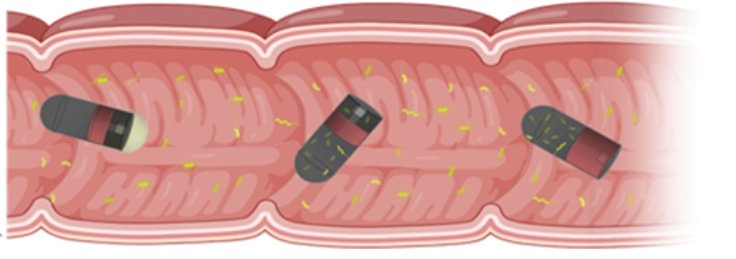
Researchers at the Indian Institute of Technology (IIT) Delhi, and All India Institute of Medical Sciences (AIIMS) have developed an ingestible device that can sample bacteria directly from the small intestine, opening a new window into the human gut microbiome.
Existing tools are invasive, such as endoscopy or ileostomy, or indirect, relying on stool samples that do not truly reflect conditions higher up in the digestive tract.
“To say there is a hidden universe of living microbes in our body is no exaggeration but a scientific reality – we call it the human microbiome. Just as we send rovers to explore outer space, we need miniaturized devices to explore the inner space of the human body,” explained Prof. Sarvesh Kumar Srivastava, Principal Investigator at the Medical Microdevices and Medicine Laboratory (3MLab), CBME, IIT Delhi.
“The prototype microdevice, once swallowed, can autonomously collect microbes from specific regions of the upper GI tract, allowing species-level identification of the residing microbes, among other biomarkers,” added Prof. Sarvesh Srivastava. The researchers say their invention provides a much clearer picture of the microbes living inside our gut than conventional stool testing.
Once swallowed, the pill stays shut in the stomach. It opens only in the intestine to collect bacteria, then seals itself again to keep the sample safe while moving through the gut. The team has already filed the patent and validated their gut-sampling technology in an animal model using a microdevice no larger than a grain of rice! The effort now is on advancing this platform technology to help Indian patients in the clinic after necessary approvals.
Co-senior author Dr. Samagra Agarwal from the Department of Gastroenterology and Human Nutrition Unit at AIIMS New Delhi explained, “The small intestine plays a crucial role in health and disease. Understanding the microbes and chemicals being released there could be key to early disease detection, monitoring of chronic diseases, and developing more targeted treatments.”
The project is funded by the Indian Council of Medical Research (ICMR).