Google announces new additions to Gemma open model family to advance AI in healthcare in India
January 19, 2026 | Monday | News
MedGemma 1.5 represents the next generation of Google’s medical AI
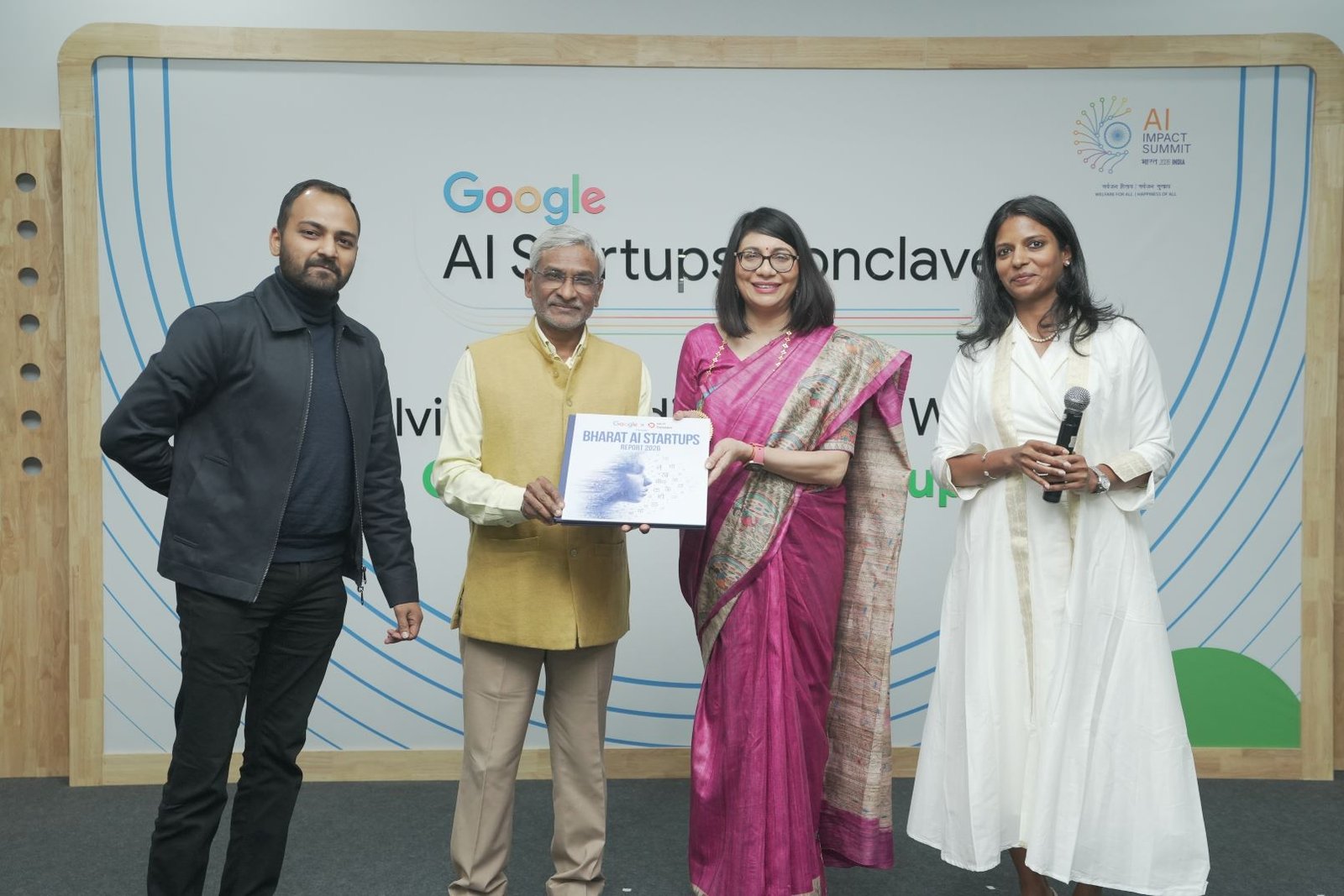
Highlighting the current challenge for India’s mature and fast-growing startup ecosystem, Google has announced the Google Market Access Programme, a first-of-its-kind initiative to help Indian startups strengthen their go-to-market efforts, shortening the journey from local pilots to global scale.
Google has also announced new additions to its Gemma open model family, designed to help startups build population-scale and production-ready AI applications.
- MedGemma 1.5 addresses the growing demand for advanced healthcare AI, enabling startups to work with high-dimensional medical imaging at scale.
- FunctionGemma, a lightweight model optimized for function calling, supports the next generation of on-device, agent-based systems, allowing AI applications to take secure, reliable action locally. Together, these models expand the building blocks available to developers creating real-world, deployable solutions.
MedGemma 1.5 represents the next generation of Google’s medical AI. Building on the success of the company’s Health AI Developer Foundations program, this new open 4-billion parameter model enables developers to build applications that support complex medical imaging workflows, including those involving 3D volumes (CT and MRI scans), whole slide histopathology, chest X-ray longitudinal analysis and anatomical localisation, and extraction of content from medical lab reports.
The release of MedGemma 1.5 follows Google’s recent collaboration with India’s flagship medical institute, All India Institute of Medical Sciences (AIIMS), which is leveraging MedGemma to build India’s Health Foundation Models, contributing to India’s Digital Public Infrastructure and the outcomes being made available to the ecosystem.
FunctionGemma, a specialised version of the Gemma 3 270M model, acts as a fully independent agent for private, offline tasks, or as an intelligent traffic controller for larger connected systems. It helps translate natural language commands into executable actions, allowing startups to build on-device, low-latency applications with automated workflows. FunctionGemma supports the cost-effective and lightning-fast development of mobile solutions that respect user privacy and can work seamlessly even on low-end devices without a constant internet connection.
FunctionGemma supports a broad developer ecosystem and can be fine-tuned using popular tools such as Hugging Face Transformers, Unsloth, Keras, and NVIDIA NeMo, and deployed across platforms including LiteRT-LM, vLLM, Llama.cpp, Vertex AI, and other edge inference environments.
These launches complement Google’s ongoing investments in India’s physical AI infrastructure, including the Global AI Hub in Visakhapatnam, which provides a 1-gigawatt foundation powered by green energy and the company’s advanced AI chips, to ensure Indian startups have access to high-performance compute.