The Experience Center Race: What Global Life Science Suppliers Are Really Building in India
October 01, 2026 | Thursday | Features | By Mansi Jamsudkar Padvekar
India's life sciences industry is entering a phase where global technology suppliers are competing on more than instruments and specifications. As pharmaceutical and biopharma companies move towards biologics, cell and gene therapies, advanced analytics and global-scale manufacturing, suppliers are investing in experience centres, application laboratories, bioprocessing hubs and R&D facilities closer to customers. Agilent Technologies' new Customer Experience Center in Mumbai is the latest example, following investments by Thermo Fisher Scientific, Cytiva and Merck Life Science across key Indian clusters. These facilities are becoming strategic assets—helping customers test technologies, solve process challenges and build skills, while giving suppliers a deeper role in the technology and workflow decisions shaping India's next phase of life sciences growth.
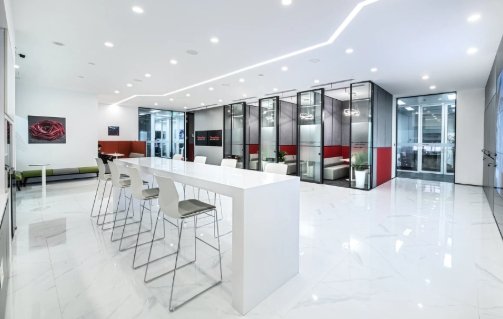
In April 2026, Agilent Technologies inaugurated its Customer Experience Center (CEC) in Mumbai, bringing together hands-on technology demonstrations, application expertise, and commercial operations under one roof. The facility complements Agilent's expanding India footprint, which already includes its India Solution Center in Manesar, a Refurbishment Center, and the Hyderabad Biopharma Experience Center, a connected network designed to support laboratories across pharmaceuticals, biotechnology, diagnostics, food safety, and environmental testing. Agilent is not acting alone. Over the past 18 months, several major global life sciences suppliers have opened, expanded, or announced experience, training, R&D and process-development facilities in India. The pattern points to a broader shift in strategy: suppliers are no longer competing on instrument specifications alone; they are increasingly competing on the depth of technical capability they can build around their technologies.
Beyond sales: building local capabilities
Agilent's Mumbai launch sits inside a much broader wave. Thermo Fisher Scientific inaugurated two facilities in Hyderabad's Genome Valley in November 2025, a Customer Experience Center (CEC) and a Bioprocess Design Center (BDC), representing an investment of Rs 90 crore, built in partnership with the Telangana government and India's Department of Biotechnology under the Biotech Park Project. The Hyderabad CEC alone demonstrates more than 50 integrated workflows across over 20 applications, spanning cell and gene therapy, mRNA, oncology, proteomics, and analytical sciences.
"Thermo Fisher supports innovators as they move from scientific discovery to robust, scalable and commercially viable processes. Our CEC and BDC in Hyderabad advance this objective through three areas: access to advanced technologies, scientific collaboration for process development, talent development and industry–academia partnerships," said Srinath Venkatesh, Managing Director, India & South Asia, Thermo Fisher Scientific. "The centers bring research, analytical and bioprocessing capabilities together within a common environment, giving scientists and manufacturers access to integrated workflows across targeted therapeutics, multi-omics and translational research, bioprocessing design and manufacturing, equivalence studies and process monitoring. Hands-on training programmes are designed to build skills of scientists in research, QC & manufacturing to accelerate development and improve reproducibility & precision in these areas."
Venkatesh pointed to a specific gap the centers are designed to close: "A challenge scientists and business face is translating research into robust, scalable and reproducible processes to shorten the path from discovery to clinical development and commercial manufacturing. At CEC and BDC, we partner with biopharma researchers and manufacturers on method development, optimisation, validation and proof-of-concept studies. This enables scientists to refine analytical workflows, improve reproducibility, and generate high-quality data that supports confident decision-making. In doing so, we can help organisations address development risks, improve productivity and accelerate the path from discovery through clinical development and commercial manufacturing."
He also tied the centers to a longer-term talent strategy: "Building a strong biopharma ecosystem also requires a sustained focus on talent. Our industry–academia collaborations provide students and researchers with access to advanced technologies, hands-on training, certification programmes and continuing education aligned with industry requirements. Through internships, applied research projects and mentorship, we aim to strengthen the connection between academic learning and industry practice. Together, these initiatives are designed to build a future-ready scientific workforce, strengthen translational research and support India's continued growth as a globally competitive biopharma innovation and manufacturing hub."
That distinction matters because India's next phase of life-sciences growth will require more than additional laboratory capacity. As biologics, cell and gene therapies, mRNA platforms and complex analytical workflows move towards commercial scale, suppliers increasingly need to be embedded in the development and manufacturing process itself. Experience centres therefore become more than demonstration facilities: they become points where technology adoption, process development and workforce training converge.
Cytiva, the bioprocessing arm of Danaher Corporation, has been building out India capacity even more aggressively. In February-March 2026, it opened a 30,000-square-foot Fast Trak bioprocessing centre in Bengaluru, equipped with single-use bioreactor systems scaling up to 200 litres and ISO-certified validation labs. This followed an earlier expansion in Pune, a 33,000-square-foot manufacturing facility and Experience Center at Hinjawadi Rajiv Gandhi Infotech Park that doubled Cytiva's India manufacturing capacity and added immersive training programmes for upstream and downstream bioprocessing technologies.
"We see India entering a new chapter in bioprocessing. The conversation is no longer just about manufacturing for India; it is increasingly about manufacturing from India for the world," said Manoj Kumar R Panicker, General Manager, South Asia at Cytiva.
"As customers invest in biologics, biosimilars and CDMO-led growth, they need partners that can combine local supply, global technology and technical expertise. Expanding our Pune manufacturing capacity is a reflection of our long-term belief in India's role as a strategic biomanufacturing hub. Together with our Bengaluru Fast Trak and R&D capabilities, we are helping build the ecosystem that can accelerate innovation, scale and global competitiveness."
Panicker also pointed to what he called a substantive basis for India's optimism: "India's optimism is rooted in substance, not sentiment. The country combines scientific talent, proven manufacturing excellence, a growing biologics pipeline and increasing policy support at a time when global supply chains are being rebalanced. We are seeing Indian companies move up the value chain, investing not only in capacity but also in technology, quality systems and innovation. The growth of the CDMO sector is a strong example of this evolution. While the journey is still unfolding, the trajectory is clear: India is positioning itself not just as a cost-efficient production base, but as a trusted global partner in biopharmaceutical development and manufacturing."
The strategic significance is that Cytiva is positioning physical infrastructure around the entire journey from process development to manufacturing scale-up. That gives the company a role beyond equipment supply, placing it closer to the technical decisions customers make when they select, validate and scale bioprocessing platforms.
Cytiva now has three major India facilities spanning manufacturing, experience-led training, Fast Trak process development and R&D, giving it one of the more integrated supplier footprints in the country.
Sartorius and Repligen have also expanded their presence in India, adding to the growing life-sciences ecosystem around Hyderabad's Genome Valley. The cluster spans around 2,000 acres and is home to more than 200 life-science companies, including global players such as Novartis, GSK, Ferring Pharma and Lonza. Amgen has now announced plans to establish a new Science and Innovation Center in Genome Valley, further strengthening the cluster's global R&D profile.
Merck Life Science took a related but distinct approach in February 2025, unveiling its Formulation & Technology Centre in Turbhe, Navi Mumbai, explicitly positioned as a hub serving not just India but the broader APAC, Middle East, and Africa region. Unlike the instrument-demonstration model used by Agilent and Thermo Fisher, Merck's centre is built around a specific technical bottleneck: helping pharmaceutical manufacturers navigate complex drug formulation, patent workarounds, and production scale-up, offering hands-on training, technical consulting, and troubleshooting support. The launch drew India's Biotechnology Industry Research Assistance Council (BIRAC) and the Indian Pharmaceutical Alliance (IPA) as institutional participants, a sign that these facilities are increasingly treated as national scientific infrastructure, not just vendor showrooms. Merck Life Science's India entity reported Rs 2,200 crore in revenue for the financial year ending March 2025, giving a sense of the scale of the India business these centres are meant to support.
Thermo Fisher has continued layering on India investment beyond its Hyderabad launch. The company has also expanded its Bengaluru R&D Centre to advance antibody innovation, giving its India footprint a second dimension beyond customer-facing infrastructure: internal research capability. Together, its Hyderabad and Bengaluru investments illustrate a strategy that combines customer training, process development and proprietary R&D.
Why Now: The Numbers Behind the Investment
The timing is not coincidental. The suppliers are building infrastructure around a market that is becoming more complex, more biologics-heavy and more globally integrated. India's expanding CDMO base, growing biologics pipeline and policy push towards advanced biomanufacturing are increasing the number of companies that need access not just to equipment, but to application expertise, process-development support and trained personnel.
India's single-use bioreactor market is projected to expand from $3.7 billion in 2025 to $10.9 billion by 2032, a 16.7 per cent CAGR, among the fastest-growing segments in global bioprocessing, and specifically flagged by industry analysts as the fastest-growing country market through 2030. That growth is playing out against a CDMO sector that JM Financial projects will roughly double from $7 billion in FY23 to $14 billion by 2028, a 14 per cent CAGR that outpaces the global CRDMO industry's roughly 9 per cent growth rate over the same period, directly increasing the number of India-based teams needing hands-on training on complex bioprocessing equipment.
Estimates of the sector's overall size vary considerably depending on methodology and scope, with figures from other research firms ranging from roughly $8.5 billion to $25 billion for 2025 alone, but the doubling trajectory by 2028 is the consistent thread across most projections. India already holds a meaningful base to build from: the country produces an estimated 60 per cent of the world's vaccines and commands over 40 per cent of the US over-the-counter drug export market, giving global suppliers an existing manufacturing footprint to layer new biologics and cell-and-gene-therapy capacity onto rather than building from zero.
The sentiment data backs this up. According to Cytiva's 2023 Global Biopharma Resilience Index, 65 per cent of biopharma executives in India expect biologics manufacturing in their country to increase dramatically over the next three years, 15 percentage points higher than the global average, while 46 per cent say they're actively focused on onshoring drug manufacturing or increasing domestic sourcing. More recent government figures suggest that this optimism is translating into a much larger industrial ecosystem. India's bioeconomy reached $195.3 billion in 2025, up from about $165 billion a year earlier, while the country now has more than 11,800 biotech startups. The government is targeting a $300 billion bioeconomy by 2030 under the BioE3 policy. These investments feed directly into India's stated national ambition to grow its bioeconomy to $300 billion by 2030 under the government's BioE3 policy, a target officials have repeatedly cited alongside Cytiva's Bengaluru and Pune expansions specifically.
The Competitive Read
The most revealing feature of this investment wave is not the number of facilities being announced, but what they are designed to do. Across Agilent, Thermo Fisher and Cytiva, the common model combines three functions: technology demonstration, applied technical training and customer support. That suggests the competitive battleground is shifting from the sale of equipment to the development of the ecosystem around that equipment.
For suppliers, this creates a potentially more durable form of competitive advantage. A customer trained on a particular workflow, software environment and validation approach is not necessarily locked in—but switching suppliers can require retraining personnel, revalidating methods and adapting established processes.
Taken together, these facilities suggest a new axis of competition among global biosuppliers in India, not just who sells the best mass spectrometer or bioreactor, but who builds the deepest local capability infrastructure around it. Agilent's four-site India network (Manesar, the Refurbishment Center, Hyderabad Biopharma Experience Center, and now Mumbai) mirrors Cytiva's three-site network (Pune, Bengaluru Fast Trak, Bengaluru R&D) and Thermo Fisher's India network similarly combines a Hyderabad CEC and BDC with an antibody-focused R&D capability in Bengaluru, three different global suppliers independently converging on the same "connected network of local hubs" model within roughly the same 12-month window. Merck Life Science's Navi Mumbai centre extends the pattern to formulation science specifically, and its explicit APAC/MEA regional framing suggests some of these India investments are being built to serve customers well beyond India's own borders.
This also signals where each company is betting India's growth will concentrate. Agilent's Mumbai CEC leans toward pharma, diagnostics, food safety, and environmental testing, the more distributed, broad-based end of India's lab economy.
"India's pharma and applied markets are evolving rapidly, with increasing focus on quality, compliance, and advanced analytical capabilities," said Bharat Bhardwaj, Vice President, Asia Pacific, Agilent Technologies, of the Mumbai center. "The CEC in Mumbai enhances how we support customers across India as they modernise laboratories, adopt new technologies, and meet both scientific and business objectives."
Thermo Fisher and Cytiva's Hyderabad and Bengaluru/Pune investments lean specifically into biologics, cell and gene therapy, and bioprocessing, the higher-value, higher-growth segment tied directly to India's CDMO expansion and its $300 billion bioeconomy target.
The Strategic Logic Behind the Experience Centres
That competitive read, however, needs to be separated from the suppliers' own positioning. Much of the language surrounding these facilities is understandably centred on training, capability-building and talent development. Those benefits may be genuine, but the same infrastructure can also strengthen a supplier's position within the customer's operating ecosystem.
"Training," "capability-building," and "talent retention" are the words each company reaches for. But training a QC team exclusively on one supplier's proprietary workflows, or certifying staff on a specific analytical software suite inside a purpose-built center, has a second, less charitable effect: it raises the cost of ever switching to a competitor. Retraining staff, re-validating methods, and re-qualifying instruments under India's regulatory requirements are not small costs, and a lab that has invested in one supplier's ecosystem has real reasons to stay put even if a rival's hardware improves.
In other words, capability-building and customer retention are not necessarily competing explanations. The same training programme can address a genuine industry skills gap while simultaneously deepening customer familiarity with a supplier's technology stack.
One of the companies has said this almost explicitly. Its Experience Center was framed as addressing "the problem of retaining talent" by providing hands-on training that strengthens the skills of India's biotechnology workforce, rather than requiring engineers to travel abroad for training or relying on remote support. Another center is described as a facility to "learn, train, and collaborate" using bench-to-pilot scale equipment for process scale-up. In both cases, the public framing is training-first rather than sales-first. Yet the commercial effect can run in parallel: the more deeply customers are trained within a particular supplier's workflows, equipment and ecosystem, the more expensive and disruptive it can become to move elsewhere.
Both readings fit the same set of facts, and it's worth noting that none of the source material for this report includes independent, third-party data on training completions or measurable skill outcomes from any of these centers. Every capability claim currently traces back to the supplier's own press materials, not an outside audit.
The "India moment" framing deserves similar scrutiny. At least one of these Bioprocess Design Centers was announced explicitly as an expansion of an existing regional network that already included Singapore and Incheon, South Korea, meaning India was the newer addition to a build-out that started elsewhere in Asia, not the market driving the trend. That complicates the idea of a coordinated wave of investment uniquely timed to India's growth; it may be closer to India finally catching up to infrastructure its regional peers already had, which is a less flattering, if still commercially significant, version of the same story.
A related pattern shows up in where these centers are actually located. Every facility named so far sits in one of India's five already-dominant life sciences metros, Mumbai, Navi Mumbai, Hyderabad, Bengaluru, and Pune. None of the companies surveyed here has announced a comparable center in tier-2 manufacturing clusters like Baddi in Himachal Pradesh or Ahmedabad and Vadodara in Gujarat, despite those regions carrying real existing production volume. If capability infrastructure keeps concentrating in the same handful of metro hubs, it risks reinforcing an already uneven distribution of scientific talent rather than closing the gap these companies say they're addressing.
The challenge is particularly relevant for India's manufacturing expansion, because production capacity is not confined to the largest metros. If advanced training remains concentrated in the same five ecosystems, companies operating outside these clusters may continue to depend on travelling personnel, remote technical support or periodic access to supplier facilities.
Outlook
Expect the building spree itself to continue, even if the more skeptical reading above turns out to be closer to the truth than the suppliers' own framing. With India's CDMO sector on track to double by 2028 and its single-use bioreactor market growing at nearly 17 per cent annually, the commercial logic holds regardless of motive: the supplier that trains India's next generation of process engineers and QC scientists inside its own experience center gains a durable advantage that a superior spec sheet alone cannot replicate, precisely because switching costs are real once a team is trained.
Whether that advantage is viewed primarily as capability-building, customer development or a form of ecosystem retention may ultimately matter less than the commercial reality: once suppliers become embedded in how India's scientists are trained, processes are developed and technologies are validated, their competitive position becomes considerably harder to dislodge. The next phase of this race, therefore, may not be about who builds the biggest experience centre, but who can turn these facilities into durable platforms for skills, application development, process innovation and, ultimately, global-scale manufacturing from India.
Mansi Jamsudkar Padvekar
mansi.jamsudkar@mmactiv.com