Beyond the Spin: Can Indian Centrifuge Makers Move Up the Technology Curve?
November 01, 2026 | Sunday | Features | By Mansi Jamsudkar Padvekar
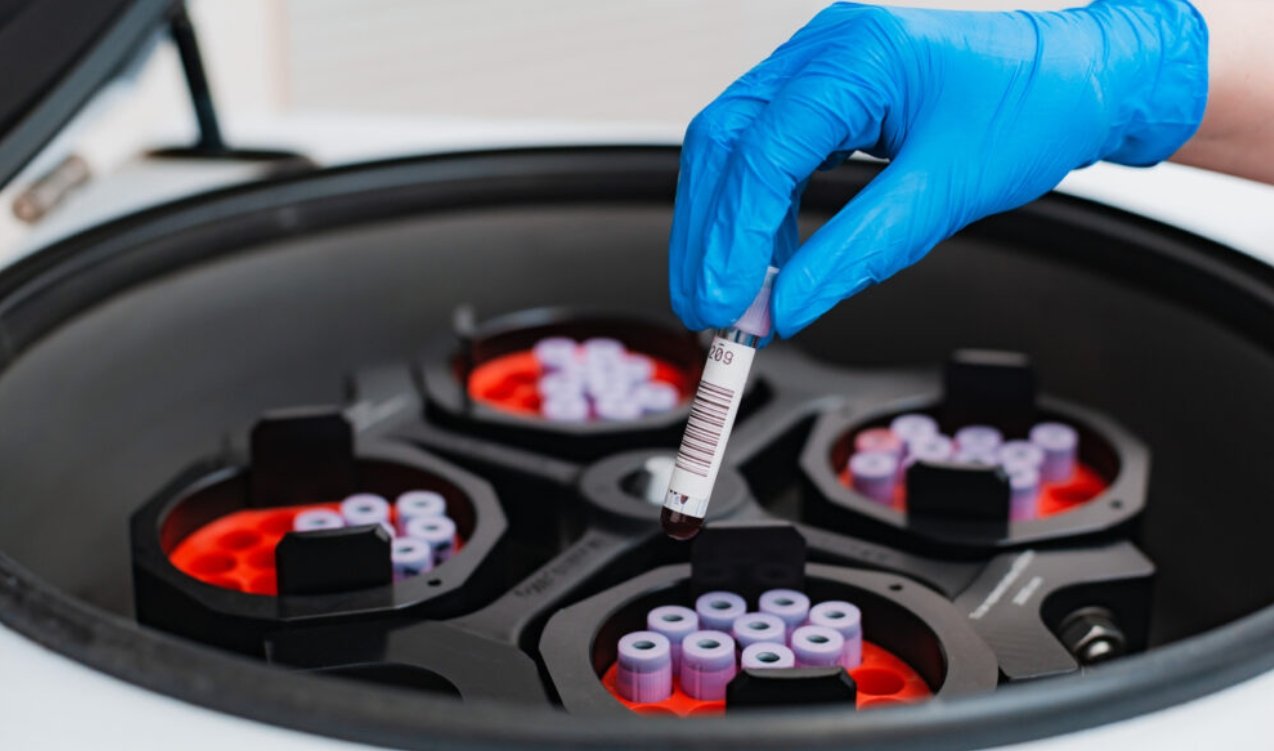
Centrifugation is evolving beyond rotational speed, capacity and price, with laboratories increasingly prioritising precision, safety, reproducibility and automation. For Indian manufacturers, this presents an opportunity to move beyond cost-led competition towards higher-performance, application-specific solutions. According to MarketsandMarkets, India's laboratory centrifuge market was valued at $46 million in 2025 and is projected to reach $58.8 million by 2030, growing at a compound annual growth rate (CAGR) of 4.2 per cent. As global suppliers advance workflow integration, can Indian manufacturers combine engineering, innovation and local support to compete in higher-value segments?
image credit- freepik
A centrifuge is among the most familiar instruments in a laboratory, but the business of centrifugation is becoming increasingly sophisticated. Pharmaceutical companies, biotechnology firms, diagnostic laboratories and research institutions have distinct requirements for sample processing, throughput, temperature control, reproducibility, safety and workflow integration.
For suppliers, this creates a market with multiple competitive layers. Domestic manufacturers can address demand for dependable, cost-effective laboratory equipment, while international suppliers offer portfolios spanning routine centrifugation, specialised research and advanced separation. At the same time, laboratories are increasingly automating sample preparation and connecting instruments to improve efficiency and consistency.
According to MarketsandMarkets, India's laboratory centrifuge market was valued at $46 million in 2025 and is projected to reach $58.8 million by 2030, registering a CAGR of 4.2 per cent. The report identifies pharmaceutical companies, biotechnology firms, clinical laboratories and academic institutions among the demand drivers, with automated centrifuges emerging as the fastest-growing product segment.
The market outlook points to expanding demand, but growth alone does not determine where the most attractive opportunities lie. The bigger question is whether Indian manufacturers can capture a greater share of higher-value demand as customer expectations evolve.
Indian Suppliers Have Scale, But Where Do They Sit on the Value Chain?
India has an established centrifuge manufacturing base, although laboratory centrifuges and pharmaceutical-process centrifuges serve different applications and should be assessed separately.
Neuation, the centrifuge brand of Accumax Lab Devices, offers micro, clinical, laboratory, universal and refrigerated centrifuges. REMI Elektrotechnik is another established Indian manufacturer, with products for laboratory, research, clinical and blood-bank applications, including refrigerated and programmable systems. Its portfolio incorporates features such as brushless motors, imbalance detection and microprocessor controls.
Meanwhile, companies such as Ace Industries, Padmatech Industries, R.G. Industries, Stalwart International and Whirler Centrifugals operate primarily in industrial and process centrifugation, including applications relevant to pharmaceutical and active pharmaceutical ingredient (API) manufacturing.
This diversity means India's centrifuge industry cannot be assessed simply by comparing a domestic product with an imported equivalent. The more important question is where Indian suppliers compete along the technology value chain and how effectively they are moving into higher-value applications.
Clinical laboratories and hospitals typically require centrifuges for routine sample preparation, while research and biotechnology facilities may need specialised systems for cell processing, molecular biology and protein-related applications. Pharmaceutical companies use centrifuges across quality control, research and development, and selected manufacturing processes. Depending on the application, buyers may prioritise affordability and service support, refrigeration and rotor options, or faster processing and reduced manual intervention.
According to Aanak Goswami, Deputy General Manager – Global Marketing, Accumax Group, the Indian market spans a broad price spectrum, reflecting differences in application and performance requirements. “Entry-level clinical and routine laboratory centrifuges can start from around Rs 15,000–Rs 50,000, while more advanced benchtop, refrigerated and high-speed systems can range from approximately Rs 1 lakh to Rs 5 lakh or more,” he says.
Goswami notes that the bulk of current demand by volume continues to come from routine laboratory, clinical, diagnostic and general research applications, where reliability, ease of use and value for money remain important.
For manufacturers, understanding the distribution of demand across product categories is therefore essential. Annual unit sales, average selling prices, revenue by product category and the split between domestic and imported equipment would help establish whether demand is shifting towards refrigerated, high-speed, programmable and specialised systems.
Historically, cost competitiveness, manufacturing flexibility and local service have been important strengths for domestic suppliers. These advantages remain significant, particularly for laboratories and manufacturing facilities operating under budget constraints. However, the premium end of the market is increasingly defined by automation, programmable workflows, temperature management, rotor flexibility, safety systems, data handling, connectivity, energy efficiency and lifecycle performance.
An Indian manufacturer may offer a lower acquisition cost, but if an international supplier demonstrates stronger workflow integration, documentation and lifecycle performance, the initial price difference becomes only one part of the purchasing decision.
Technology and Automation Are Changing the Competition
Centrifuge performance is not determined by rotational speed alone. Rotor design, temperature management, acceleration and deceleration, safety systems, controls, ease of operation and the ability to reproduce a procedure all influence purchasing decisions.
International suppliers are increasingly combining these capabilities in their product offerings. Eppendorf, for example, has positioned its SpinPro range around performance, ease of operation, sustainable cooling technologies, documentation and laboratory information management system (LIMS) integration.
Beyond core performance, digital documentation, equipment-management features and energy-efficient cooling can become important differentiators, particularly where laboratories prioritise workflow efficiency, traceability and compliance. However, the commercial opportunity depends on which capabilities customers require and are willing to pay for.
The technology benchmark is also expanding beyond the standalone instrument. Agilent Technologies offers a robot-accessible microplate centrifuge designed for high- and medium-throughput applications, including polymerase chain reaction (PCR) purification and cell harvesting. Its system can be accessed by laboratory plate handlers and robots, demonstrating how centrifugation can become part of an automated process rather than a separate manual step.
Hamilton Company approaches this opportunity from the laboratory automation side. Its integrated-device offering includes shaking and centrifugation devices that can be incorporated into automated liquid-handling workflows and controlled through its VENUS software. Hamilton is therefore relevant to the wider automation discussion, although it is not a direct equivalent to a broad standalone centrifuge manufacturer.
Tecan's expansion in India also reflects the broader development of the laboratory automation ecosystem. In May 2026, the company announced direct sales and specialist laboratory automation service operations in India, with a local team based in Gurugram. Its presence brings automation capabilities closer to pharmaceutical, biotechnology, academic and diagnostic customers.
Together, these examples illustrate an important development: in some applications, the value of centrifugation increasingly depends on how well the instrument fits into the wider workflow. Automation can reduce manual handling, support repeatability and improve throughput, but its commercial value depends on the process being automated and the investment required.
For Indian manufacturers, connectivity is emerging as an important consideration in product development. Aanak Goswami believes centrifuge integration will become increasingly important as laboratories and biopharmaceutical facilities adopt automated and connected workflows.
“Integration will become increasingly important as laboratories move towards automated and connected workflows. Customers will increasingly expect centrifuges to connect with laboratory systems, data and other equipment for better efficiency, traceability and reproducibility. We see this connectivity as an important part of the next generation of centrifuge technology,” he says.
This transition could influence how centrifuges are specified, purchased and deployed, particularly in facilities handling large sample volumes or operating under stringent documentation requirements. Connectivity can support the recording of operating parameters, improve traceability and help standardise procedures across instruments. In automated environments, compatibility with LIMS, robotic sample handlers and other equipment can also reduce manual intervention and improve workflow coordination.
However, integration requirements will vary across customer segments. Routine diagnostic laboratories may continue to prioritise reliability, ease of operation and affordability, while advanced research and biopharmaceutical facilities may place greater emphasis on data management, reproducibility and compatibility with existing automation infrastructure.
For manufacturers, the challenge is to develop connectivity features that address these specific needs without adding unnecessary complexity or cost. The commercial opportunity lies in making centrifuges not just more advanced instruments, but more effective components of the connected laboratory.
For Indian manufacturers, this raises practical questions. Are customers actively requesting robot-compatible systems and digital documentation, or do these requirements remain concentrated in specialised facilities? Which laboratory segments have a clear business case for automation? And can domestic suppliers develop the necessary capabilities at price points that Indian customers will accept?
The answers should guide investment in product development. Manufacturers do not necessarily need to replicate every advanced feature offered by international suppliers. They may find more immediate opportunities in improving controls, simplifying operation, expanding rotor compatibility, strengthening temperature performance or developing application-specific models. The objective is to align product development with demonstrated customer demand.
Domestic Manufacturers Move Beyond Price-Led Competition
The balance between domestic and imported centrifuges is another important indicator of the industry's evolution. Indian manufacturers have traditionally competed on affordability, local service and the availability of spare parts. However, increasing investment in research and development, precision engineering, automation and quality systems is creating opportunities to compete in more sophisticated product categories.
Goswami believes Indian manufacturers are steadily moving up the technology curve, supported by investments in research and development, engineering and application-specific technologies. “India continues to have a healthy mix of domestic and imported centrifuges. However, Indian manufacturers are steadily moving up the technology curve, supported by greater investments in R&D, precision engineering, automation, quality systems and application-specific technologies,” he says.
For Accumax, this shift involves combining engineering and manufacturing capabilities with an understanding of customer applications and the advantages of local support. “At Accumax, we believe our journey reflects this evolution. We are continuously investing in technology and engineering capabilities to develop globally competitive centrifugation solutions, while combining this with the advantage of local manufacturing, application understanding and responsive customer support,” Goswami adds.
He also points to the company's international presence as evidence of the potential for Indian-engineered products to compete beyond the domestic market. “Our presence across continents and the trust we have built with customers globally gives us confidence that high-quality, precision-engineered centrifuges can be Engineered in India and Trusted worldwide. The opportunity for Indian manufacturers is not simply to replace imports, but to build technologies that compete globally on performance, reliability, innovation and customer trust,” he says.
The distinction is important. Replacing imports may offer an initial commercial opportunity, but sustained growth in higher-value segments requires manufacturers to demonstrate performance, reliability and product consistency against established international benchmarks.
The Real Battleground Is Value and the Workflow
India's centrifuge market is not a straightforward contest between domestic and international brands. It spans different performance levels, customer requirements and expectations of how equipment should fit into laboratory operations. As these expectations evolve, the next phase of competition is likely to be shaped not just by sales volumes or rotational speed, but by workflow integration, application-specific engineering and the value delivered over a product's lifecycle.
Eppendorf and Beckman Coulter provide benchmarks in centrifuge technology and product breadth. Agilent and Hamilton demonstrate how centrifugation can be integrated into automated laboratory workflows, while Tecan's expansion in India reflects the wider development of laboratory automation. Although these companies do not all compete for the same purchases, their capabilities illustrate the shift towards more connected and increasingly automated laboratory operations.
The change may not happen inside the centrifuge alone, but around it. Laboratories are increasingly automating sample preparation, liquid handling and analytical processes, making centrifugation one stage in a wider chain of connected workflows rather than an independent instrument operated manually. This is particularly relevant to diagnostics and life-science research, where rising sample volumes can make manual intervention a bottleneck. In pharmaceutical and biopharmaceutical environments, reproducibility, process control and documentation can be equally important.
Automated centrifugation systems are therefore significant for the industry's next phase. Equipment that reduces operator intervention, standardises processes and connects with other laboratory systems can improve workflow efficiency. However, the commercial case for such systems must be established application by application.
For Indian manufacturers, the opportunity is not necessarily to reproduce every feature of a premium imported system. It is to identify where customers need additional functionality and develop it at a commercially viable price. Rather than competing feature for feature with global brands, domestic suppliers could build advantages through application-specific automation, product customisation, dependable performance, local service, faster technical support and lower lifecycle costs. These strengths could be particularly valuable to customers seeking to improve productivity without taking on the cost of a high-end imported system.
Moving into higher-value segments, however, requires investment beyond mechanical manufacturing. Advanced centrifugation brings together motors and drives, refrigeration, sensors, electronic controls, software, rotor engineering and safety systems. Pharmaceutical applications may also require a stronger understanding of validation, documentation and process requirements. Developing these capabilities will be important if domestic suppliers want to move beyond routine laboratory equipment and compete in more specialised categories.
This is where the localisation debate becomes more meaningful. “Made in India” does not necessarily mean that the entire technology stack is developed domestically. The industry will increasingly need to consider how much engineering, electronics, software and critical-component development takes place locally, and whether manufacturers can progressively reduce their dependence on imported technologies in higher-value categories.
The commercial opportunity lies in combining India's cost competitiveness and local support with stronger application-specific engineering and capabilities that customers are demonstrably willing to pay for. Manufacturers will need to identify the segments where investment in automation, connectivity or specialised performance can translate into sustainable demand, rather than adding features without a clear business case.
The question is no longer simply whether India can manufacture centrifuges. It is whether domestic suppliers can identify the right higher-value segments, develop the necessary technical capabilities and turn them into sustainable business growth. The next battle will be won not by volume alone, but by delivering the right combination of performance, workflow efficiency, service and value.
Mansi Jamsudkar Padvekar
mansi.jamsudkar@mmactiv.com